Click here for the pdf of the talk by Prof. S.Krishnaswamy “Life:The Evolving Story”


Click here to see the Google form for submission
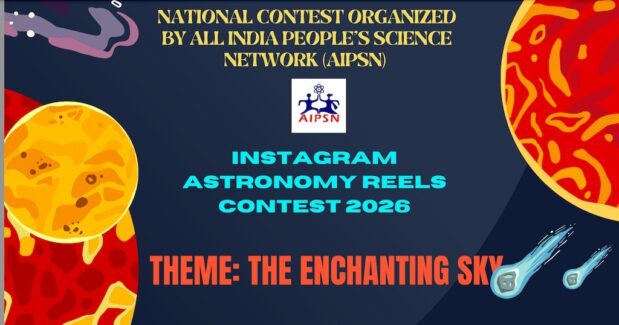
Instagram Astronomy Reels Contest 2026
AIPSN invites submissions on this theme. The contest is open to all between 12 to 25 years of age and there is no submission fee. Winners will be announced on National Science Day, 28th February 2026. There will be five prizes in both categories given to the best 5 reels in each, and e-certificates of participation will be given to all participants.
Please read the rules and guidelines carefully before submission. You will not be able to edit your submission.
Rules:
Each participant can submit a single entry.
All entries must be published on instagram and the link of the post should be submitted through the Google form shared by AIPSN.
The contest is open to Indians living in India only.
Deadline for submissions: 17th February 2026 11:59 pm.
Incomplete submissions will not be considered for judging.
The reels should adhere to the theme of the contest.
The decision of the panel of judges will be final.
Use of AI should be duly declared in the instagram post, and is not preferred.
Plagiarism will be checked and plagiarized content will be disqualified.
Reels that hurt the sentiments of any ethnic or religious community will be disqualified.
Submission guidelines:
The reels can be of the duration from 15 sec (min) to 60 sec (max).
The reels should be in instagram friendly format and should be published / republished on instagram between 31 Jan 2026 to 17 Feb 2026.
Instagram reel description should clearly tag @aipsnmedia and include #astroreels2026 as a hashtag.
Submissions can be in English, Hindi or other Indian languages. For reels created in any language other than Hindi or English, it is mandatory to submit the transcript of the reel as a separate file through the form as directed.
The contest is open to participants from the following two categories:
A) 12 to below 18 years of age (posted on instagram by their parents / teachers / legal guardians).
B) 18 to 25 years of age.
How to Submit:
Click on the link: Google form or scan the QR code

Fill the form, upload the necessary documents and your submission.
Click on the Submit button.
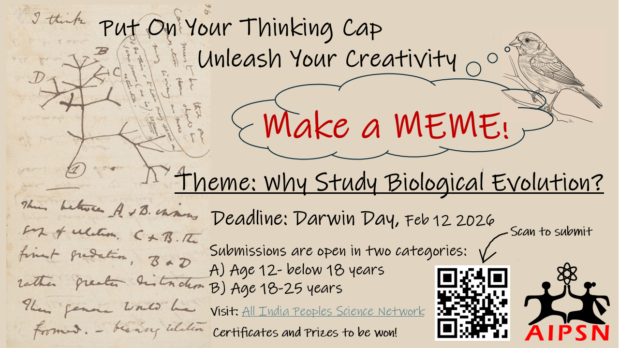
AIPSN invites submissions on this theme. The contest is open to all, and there is no submission fee. Winners will be announced on National Science Day, 28th February 2026. There will be five prizes in both categories given to the best 5 memes in each, and e-certificates of participation will be given to all participants.
Please read the rules and guidelines carefully before submission. You will not be able to edit your submission.
Rules:
Submission guidelines:
How to Submit:
Click on the link: Google form or scan the QR code

Fill the form, upload the necessary documents and your submission.
Click on the Submit button.
Note: The maximum file size allowed is 10 MB for the meme and 1 MB for other documents.
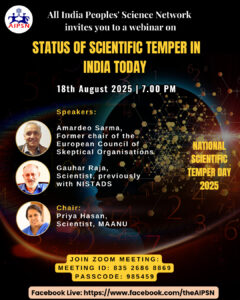
AIPSN is releasing videos on the occasion of NSTD 2025 in which scientists and others go into the some aspects related to scientific temper. They are available on AIPSN YouTube channel @aipsnmedia
https://youtu.be/JekBsVdy6eM?si=Az5vrYNFaUl0rFnC
Click here to read the full version
Click here to read a short version
6 Aug 2025
80 Years After Hiroshima & Nagasaki: Need Total Nuclear Disarmament
The All India People’s Science Network (AIPSN) strongly condemns the development, use, and continued deployment of nuclear weapons. It calls for the rebuilding of a global people’s movement dedicated to peace, against war and militarism, and in particular for complete nuclear disarmament. In a significant move, a gathering of Nobel Laureates issued a declaration in July 2025 calling for the prevention of nuclear war—the first such unified statement from that community.
Eighty years have passed since the United States dropped atomic bombs on Hiroshima on August 6, 1945, and Nagasaki on August 9, 1945, during the closing stages of World War II. Japan was looking for ways to surrender, having already been decisively defeated. Still, hundreds of thousands of civilians, including children and the elderly, were killed when the bombs were used. About 350,000 people had perished as a result of the bombings by the end of 1945, and both cities were completely destroyed. The extent of the damage to civilians was never seen before in human history.
Following the war, the world entered a prolonged arms race. By the 1980s, the global nuclear arsenal had ballooned to nearly 70,000 weapons. Since then, arms control agreements have reduced this number to an estimated 12,000. However, the threat has not diminished. India and Pakistan became nuclear-armed states by the end of the 20th century. Iran’s alleged pursuit of nuclear weapons has led to decades of sanctions and, more recently, direct military attacks by Israel and the U.S.—despite the fact that Israel itself is the only nuclear-armed country in the Middle East.
The nuclear weapons of today are far more potent than those of 1945. Delivery systems are more accurate, faster, and lethal, including submarine-launched missiles and intercontinental ballistic missiles (ICBMs). A new level of uncertainty and possible risk is introduced by the use of cutting-edge technologies like artificial intelligence in command, control, and targeting systems, which have the potential to further enhance nuclear arsenals’ destructive potential. Some contend that “nuclear deterrence” is effective because there haven’t been any nuclear weapons deployed in the previous 80 years. However, the threat of widespread civilian casualties and complete devastation is what deterrence is based on. It is against international humanitarian law, unethical, and morally repugnant. The International Court of Justice has already ruled that the threat or use of nuclear weapons is incompatible with this body of law, which has been ratified by most United Nations member states.
Moreover, nuclear deterrence has not prevented wars between nuclear-armed states. Ukraine, backed by NATO, is fighting a long war against Russia, which has nuclear weapons. Similarly, there have been several small-scale battles and military stalemates between India and Pakistan. A nuclear war could result from any one of these disputes. Proponents of deterrence claim that it only functions between “responsible” states. However, this argument is useless in the current unstable geopolitical environment, which is marked by increasing instability, a disrespect for international norms, and provocative rhetoric from world leaders. Diplomatic solutions are jeopardized when superpowers like the US and Russia flagrantly breach international organizations and agreements.
The promises made by the Nuclear Non-Proliferation Treaty (NPT) have not been fulfilled. Under Article VI of the NPT, nuclear-armed countries pledge to pursue disarmament through sincere negotiations. This obligation has largely been ignored. Instead, nuclear powers, like the US, continue to upgrade their arsenals. They also oppose other international agreements and undermine institutions like the United Nations. The existence of non-NPT nuclear-armed states, such as Israel, emphasizes the NPT’s shortcomings even more. New risks have emerged as a result of recent events. Strikes have occurred close to nuclear or radioactive sites during conventional military conflicts, including the Dimona facility in Israel, the Kirana Hills in Pakistan, the Zaporizhzhia plant in Ukraine, and the Fordow, Natanz, and Isfahan facilities in Iran. Attacks near such sites risk catastrophic radioactive contamination and raise the threat of inadvertent nuclear disaster.
In order to eliminate the nuclear threat, AIPSN urges the adoption of measures that will reduce risk and lead to disarmament:
1. Recognize the threat of nuclear weapons to humanity: Declare that the use or threat of use of nuclear weapons constitutes a crime against humanity; Prohibit all threats or uses of nuclear weapons until they are abolished.
2. Implement measures to build confidence such as: A “no first use” policy among nuclear states; Remove deployed nuclear weapons; Remove nuclear warheads from delivery systems; Revive the 1972 Anti-Ballistic Missile Treaty; Prohibit militarization of outer space; Ban the development of new nuclear weapons or delivery systems.
3. Challenge legal and moral justifications: Reassert that Article 51 of the UN Charter (Right to Self-Defence) does not permit genocide or mass destruction; Reject the idea that nuclear states have any special right to possess or use such weapons; Expose the myth of deterrence – nuclear weapons do not protect life but they only guarantee mutual destruction.
A world under the shadow of nuclear weapons is not a world at peace. The suffering endured in Hiroshima and Nagasaki must never be repeated. AIPSN renews its call to end the nuclear threat by abolishing all nuclear weapons and rebuilding a powerful people’s movement for peace, disarmament and saving lives.
16 June 2025
AIPSN is deeply saddened by the horrendous crash on 12 June 2025 of Air India’s Boeing 787-8 “Dreamliner” flight AI-171 almost immediately after take-off at Ahmedabad heading for Gatwick, London. All but one of the 242 crew and passengers perished, tragically along with (so far) an additional 30 persons where the plane crashed into a medical college student’s mess and hostel.
India’s Aircraft Accident Investigation Bureau (AAIB) has started its independent inquiry into the causes and circumstances surrounding the crash as called for by protocols of the International Civil Aviation Organization (ICAO). AAIB has started the important step of decoding the Cockpit Voice Recorder (CVR) and Digital Flight Data Recorder (FDR) recovered from the crash site. It is understood that teams from the US and UK are also arriving in India to assist. The AAIB should also issue a public notice inviting suggestions from experts and interested persons.
However, for unexplained reasons, the Union Ministry of Civil Aviation has constituted a High Level Committee (HLC) to also inquire into the crash! Although the Order constituting the HLC states that it “will not be a substitute for other inquiries,” this is directly contradicted by its Objective to “ascertain the root cause of the crash,” assess factors such as mechanical failure, human error, weather conditions etc and examine the black boxes and aircraft maintenance records, interview Air Traffic Controllers, and collaborate with international agencies. All of these fall squarely under the ambit of the AAIB investigation as mandated by ICAO Article 13.
Clearly, the HLC is an undesirable parallel investigation which will, by virtue of its backing by highest levels of government, undermine the AAIB investigation. AIPSN calls upon the Ministry of Civil Aviation to immediately revise Terms of Reference of the HLC, and remove all objectives, scope of work and mandates which overlap those of the AAIB investigation.
It is to be noted that India constituted the AAIB precisely to address the prolonged dispute with ICAO regarding perceived government interference and conflict of interest in DGCA being the regulator, certifying authority and safety inspector also conducting accident inquiries over decades. The formation of HLC reignites this controversy by interfering with the AAIB inquiry. Air accident investigations are best left to professionals and experts.
At the same time, AIPSN welcomes the broader scope of the HLC inquiry for promotion of aviation safety, excluding investigation into the crash. In Ahmedabad, the aircraft crashed into a 5-storey medical college building just 1.5km from the airport, but there were larger hospitals and establishments in crowded areas nearby, missed only by chance. Recommendations of earlier crash inquiries regarding norms for operations at “table-top” airports, distance of settlements from airports, maintenance of airports, specifications for runway end safety areas (RESA) etc, are crying out for standards, implementation, monitoring, and enforcement in the interests of public, passengers, crew, and aircraft safety. The HLC would indeed perform a valuable service if it addressed these aspects holistically.
Many questions are being raised in the US and elsewhere about the safety record of Boeing, in the context of widely publicized whistleblower accounts of manufacturing malpractices affecting safety of Boeing aircraft. Any Government intervention at this stage will raise unnecessary suspicions around the world.
Asha Mishra Satyajit Rath
General Secretary, AIPSN President, AIPSN
Click here to download pdf in letter head
ALL INDIA PEOPLE’S SCIENCE NETWORK (AIPSN)
With the passing of Dr. Jayant Narlikar on May 20th 2025, the world has lost an outstanding Astrophysicist and Relativist, and India, one of its most eminent scientists . In addition to his important research contributions, Prof. Narlikar made outstanding contributions in the area of scientific outreach. He authored numerous popular books and articles on Astronomy, Cosmology, History of science, science fiction, in Marathi, English and Hindi. In the field of science and mathematics education, he along with his life partner Dr. Mangala Narlikar, played leadership roles in curricular and textbook development at both the national level and at the Maharashtra state level. He was the founder Director of the Inter-University Centre for Astronomy and Astrophysics, which developed under his leadership as a world renowned centre for scientific research as well as public outreach in science.
In his preface to his book ‘The Scientific Edge: The Indian Scientist from Vedic to Modern Times’, Prof. Narlikar writes “ When as a young lad of twenty-two I enrolled myself as a research student in science my aim was to restrict my attention and career to research in astronomy. More than four decades later, I see that aim as confining myself to the proverbial ivory tower.
Indeed it was fortunate that my research supervisor was Fred Hoyle, a man hailed as the most original astronomer of the twentieth century and a distinguished popularizer of science and a writer of science fiction. A close association with him gradually introduced me to the wider vista of the interaction of science and society as well as the subject of the historical evolution of science. Hoyle’s example showed me that it is possible to maintain a satisfactory level of research productivity while enlarging one’s interest in these wider issues. In fact these interests provided a more mature background to my research.
So it was that while in the UK and later after having returned to India I continued and expanded these interests through writing and lecturing. I discovered that the evolution of science in the subcontinent has followed a different track from that in the West. While interacting with the public one runs into two different viewpoints. On the one hand there is awareness that for various reasons India mounted the bus of science and technology rather late and has to make up for this. On the other hand , there is the feeling that in our ancient past we led the world in knowledge. More often than not these views are stated with undue vigour”
In his writings and speeches , Prof. Narlikar consistently articulated a critical view of undue or ahistorical glorification of the past and stood unambiguously with those promoting scientific temper. Together with Dr, Narendra Dabholkar and two others, he authored a research paper which clinchingly demolished any claim of astrology to being scientific . A few weeks after the martyrdom of Dr. Dabholkar in 2013, he presented these ideas and explained the importance of scientific temper, secularism and the values of the Indian constitution as the keynote speaker to a mass public meeting organised in Pune to protest the murder.
When the AIPSN resolved in 2018 and joined hands with MANS to initiate observance of August 20th as National Scientific Temper Day, Prof. Narlikar was the first signatory to the joint AIPSN-MANS appeal for schools , colleges and organizations to publicly observe NSTD each year. He was the main speaker the first NSTD public meeting held on the eve of NSTD 2018 in Pune in which he spoke eloquently and movingly about his association with Dr. Narendra Dabholkar.
The scientific work and writings of Prof. Narlikar will continue to inspire coming generations of young scientists. The AIPSN pays respectful homage to this great scientist, science publicist and promoter of scientific temper.
Asha Mishra Satyajit Rath
General Secretary, AIPSN President, AIPSN
19 Aug 2024
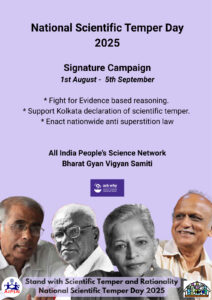
The 7th National Scientific Temper Day (NSTD 24) will be observed across the nation on August 20, 2024, to honour Dr. Narendra Dabholkar, a notable proponent of science and rational thought, who was tragically killed on this day in 2013 by anti-science extremists. His assassination was followed by the murders of others equally vocal and of similar thinking – Govind Pansare, M.M. Kalburgi, and Gauri Lankesh – who were also murdered. In 2018, the All India People’s Science Network (AIPSN), in collaboration with the Maharashtra Andhshraddha Nirmulan Samiti (MANS), established National Scientific Temper Day (NSTD) as an annual event to commemorate these individuals and to promote a scientific mindset.
Upholding Constitutional Values:
Since its establishment, NSTD has received considerable support from a variety of groups and individuals throughout India, with events occurring in numerous regions. This year’s emphasis is on the Kolkata 2024 Declaration on Scientific Temper, which underscores the urgent need for a renewed commitment to evidence-based reasoning and critical analysis in India. This is especially crucial in light of emerging socio-political movements that challenge scientific inquiry and the generation of universal knowledge. The Kolkata Declaration highlights three primary areas for focus: the role of government, the responsibilities of scientific and educational institutions, and the necessity to combat the erosion of academic freedom and the proliferation of pseudo-science. It calls upon scientists, intellectuals, and advocates promoting evidence-based thinking and upholding constitutional values, thereby fostering a scientific perspective.
NSTD also includes the “Ask Why?” campaign, which aims to advance scientific temper and promote Article 51A (h) of the Indian Constitution. This initiative seeks to reinforce the constitutional right to scientific inquiry and to enhance investment in employment; people centred development, education for all, science, technology, humanities, and the arts.
Interplay of Politics and Education:
Concerns are mounting regarding the influence of Hindutva-related initiatives within research institutions and universities, reflecting a significant political agenda that deserves condemnation. A contentious aspect of the New Education Policy (NEP) 2021 was the introduction of Indian Knowledge Systems (IKS) into educational curricula at all levels. The policy proposed integrating IKS content into existing subjects and introducing specialized IKS courses at both undergraduate and postgraduate levels.
It is essential to recognize that the foundations of modern knowledge are rooted in various ancient and modern cultures, including India, which also encompass oral traditions from marginalized groups such as tribal communities and unwritten knowledge related to agriculture, livestock, and local practices.
The implementation of IKS into educational curricula has been fraught with contention at the school and UG/PG levels. The NCERT’s recent introduction of new textbooks for Class VI, particularly in social science, gives an inaccurate and biased sanskritised representation of Indian knowledge traditions. Scholars and Ayurveda experts have noted that the NCERT Class XI textbook’s portrayal of Ayurveda includes exaggerations and inflated claims of Ayurveda as being codified 4000 years ago. In reality evidence points to around 6th century BCE.
At the higher education level, guidelines issued by UGC for incorporating IKS are unrealistic. Moreover, due to lack of faculty who understand that IKS even in earlier times has been evidence based, many HEIs are implementing courses that misrepresent, simplify and distort its rich history. Thus, the introduction of IKS has opened the door for individuals with naive or pseudoscientific views on Indian science and mathematics to gain influence. For instance, the director of IIT Mandi has faced widespread criticism for making outrageous claims that have circulated on social media, yet he represents only a small part of a much larger issue.
Haunting the System:
This year, IIT Mandi has introduced controversial topics such as “reincarnation” and “out-of-body experiences” into its IKS curriculum for B.Tech students, eliciting mixed reactions. Similarly, Banaras Hindu University (BHU) has established an entire unit within the faculty of Ayurveda dedicated to Bhoot Vidya. This six-month certificate course aims to educate doctors holding BAMS and MBBS degrees in psychotherapy, treatment of psychosomatic conditions, and paranormal activities as part of their Ayurvedic practice.
It is essential not to entirely dismiss Ayurveda and other ancient or folk medicines as irrational, as they were based on empirical practices of their times. India has a long legacy of Ayurvedic medicine grounded in experience and trial and error formulations. However, these need to undergo rigorous randomised clinical trials, which are considered the gold standard in contemporary evidence-based medicine. It has been shown that it is possible to evaluate ancient practices using modern scientific methods while maintaining their cultural significance. There is a need for rigorous research and evidence-based approaches to ensure their credibility and relevance in contemporary health practices. Consequently, AIPSN continues to emphasize the necessity of adhering to evidence-based medicine, where healing and wellness are founded on published and verified evidence.
These regressive IKS-related incursions into research institutions and universities have become commonplace, creating a persistent challenge for rational thinkers to issue statements in response. Nevertheless, in this ongoing struggle, AIPSN cannot remain silent simply because the government is a repeat offender.
Academic Freedom:
In a separate development, South Asian University recently raised concerns regarding a PhD student’s research proposal on Kashmir, which was labelled as ‘anti-national’ by university authorities. The university’s actions led to the resignation of the student’s supervisor, Professor Sasanka Perera, raising alarms about the diminishing space for unbiased research in society.
The situation at South Asian University pertains to academic freedom and the international character of the institution, rather than being an Indian institution where the directives of the government, however misguided, may be viewed as “legitimate.” If this is how South Asian University is to be operated, it may be more prudent to relocate it outside of India, shut it down, or place it under the oversight of a completely independent body comprising South Asian representatives.
Importance of NSTD 2024:
The issues related to IKS outlined here exemplify a broader agenda that necessitates critique. Similarly, the coercive influence exerted at institutions like South Asian University poses a significant threat to academic freedom and demands vigilant oversight.
These developments highlight the critical importance of NSTD 2024, which is anchored in the Kolkata Declaration on Scientific Temper, serving as a vital advocate for scientific integrity and unhindered rational inquiry in India.
Contact:
General Secretary AIPSN – Asha Mishra 9425302012 gsaipsn@gmail.com @gsaipsn
Arunabha Misra, Convenor, Scientific Temper Desk, AIPSN 9831105979

28 Mar 2024
AIPSN brief to the political parties for consideration in their election manifesto
The All India People’s Science Network (AIPSN) – a platform of people’s science movements across the country has the following positions on various critical issues e.g., propagation of scientific temper, S&T policy and process, Environment and Water resources, Health and Agriculture. As the country gears up for the 18th General Election, we would like to present these positions to be considered for inclusion in the electoral manifesto of the secular, democratic political parties of the country.
Article 51A (h) of the Constitution of India speaks of the duty of citizens to promote scientific temper. Recently, new challenges have emerged in the country in the form of strong socio-political narratives, backed by the State power, that seek to oppose any scientific approach, evidence-based reasoning or, indeed, any perspective that acknowledges universal scientific knowledge. We demand:
Various dilutions of regulatory provisions for environmental protection have taken place in the recent past that would have serious impact on our natural resources and climate and will affect people’s livelihoods and wellbeing. There will have to be reversals of these changes. The specific demands are the following:
Right to land, water and commons for all
Right to Food, Employment, Education, Health and Social Protection
Right to public and bank finance, production inputs, knowledge and market
For clarifications contact:
Asha Mishra, General Secretary, AIPSN gsaipsn@gmail.com, 9425302012, Twitter: @gsaipsn
Statement on Scientific Temper in the Current Context
Executive Summary There is an urgent need for a renewed commitment to evidence-based reasoning, critical thinking and a scientific approach in India, especially amidst growing socio-political movements that challenge a scientific temper and universal knowledge production based on commonly agreed methods and understanding. Given the changes in society and technology since the earlier declarations on scientific temper in 1981 and 2011, we emphasise the importance of embracing natural and social sciences, humanities, and the rational experiences of ordinary people in the common endeavour to combat the post-truth culture, the intentional promotion of ignorance, and diminishing trust in science exacerbated by misuse of technology. We call for action across three fronts: the State’s role, the involvement of scientific and academic institutions, and combating the undermining of science by the State, the erosion of academic freedom, and the spread of pseudo-science and unscientific beliefs. We urge scientists, intellectuals, and other like-minded individuals to support evidence-based thinking and policy-making and to uphold constitutional values to foster a scientific temper.
Introduction Since the Coonoor Statement on Scientific Temper in 1981 and the Palampur Declaration in 2011, there have been significant socio-political changes in India and around the world. Briefly, these earlier statements had emphasised the importance of fostering a scientific attitude among the people for development and social advancement. Over time, movements promoting scientific temper in India have also evolved in accordance with changing public perceptions of science and technology (S&T).
Recently, new challenges have emerged in India and elsewhere in the world in the form of strong socio-political movements, backed by the State power, that seek to oppose any scientific approach, evidence-based reasoning or, indeed, any perspective that acknowledges universal scientific knowledge. Globally, a post-truth culture is spreading, marked by a deliberate spreading of ignorance and an anti-intellectual atmosphere, along with a diminishing trust in science. It is ironic that technology, part of the broad umbrella of science, is being harnessed to support these trends through social media, such that manufactured sentiment, prejudice, false narratives, baseless opinions and conspiracy theories gain acceptance as valid ways of thinking.
Against this background, the current situation requires a renewed commitment to robust evidence-based reasoning, drawing from accumulated knowledge in the natural and social sciences, and humanities, as well as from the know-how and rational experiences of working people. Such reasoning aligns with well-recognized methodologies of different disciplines, including emerging interdisciplinary research, applicable not only in academic environments, but also in public discourse and understanding. Both scientists and lay practitioners need to actively embrace and popularise these methods considering the new socio-political realities in India.
This contemporary statement on Scientific Temper has become essential, to address present challenges. This statement shall not undertake a critical review of the previous statements / declarations or debate their points. Instead, it acknowledges past debates and critiques, incorporating their essence into the current statement, recognizing the commonality of scientific disciplines and their methodologies. Rather than revisiting old debates, the focus here is on delineating the significant challenges faced in contemporary India for the constitutionally mandated task of promoting scientific temper, the spirit of inquiry, and humanism. Knowledge production and advancement through purposeful discovery and evidence-based reasoning, including thorough consideration of diverse opinions, is currently under severe threat both in academia and in society at large.
Dangerous new theatre As noted earlier, the arena for fostering scientific temper has evolved significantly in recent decades, becoming increasingly contested, including aggressive socio-cultural forces as well as governmental policies and administrative measures antagonistic to scientific temper. The current situation in India demands critical understanding and action on three interrelated fronts: the role of the State and polity, the character and function of scientific research and academic institutions, and malign influences in society and among the general public.
Article 51A(h) of the Constitution of India speaks of the duty of citizens to promote scientific temper. There is concern in some quarters that responsibilities of the State in this regard have not been adequately highlighted. While it might have been assumed that the State’s primary responsibility is implicit when citizens are called upon for certain duties, there is a need for a clearer delineation of the State’s role.
Note: In the declaration, the terms ‘scientists’ and ‘scientific institutions’ are used as terms denoting all natural sciences, social sciences and humanities disciplines, and those others following an evidence-based path of knowledge production and understanding.
Role of the State In the initial post-Independence decades, the Indian State placed significant trust in scientists1 and scientific institutions. Development policies were evidence-driven, with research institutions and centres of excellence enjoying high priority and prestige, and enjoying substantial autonomy. Documents like the Industrial Policy Resolution and a unique Scientific Policy Resolution were foundational to planned development, guided by a multidisciplinary group of experts in the Planning Commission. Independent scientists and social scientists, both from India and abroad, were involved in policy-making, underlining the importance given to science and evidence-based policy-making. Notably, religion played a minimal role in state affairs, and secularism, defined as non-discrimination and equal respect for all religions, was practised. However, the evils of casteism and communalism have never been properly eliminated.
However, in subsequent years, bureaucratism, elitism, and a techno-fix mentality crept into the system, creating something of a divide between scientists and the general public. Trust in scientific institutions also eroded as a perception grew that “establishment science” primarily served officialdom and corporate interests, rather than the public good as supported by verifiable data. During this period, academic, professional, and informed activist voices in civil society critiqued official narratives, influencing public opinion and contributing to critical thinking and evidence-based policymaking. While the State may not have proactively cultivated scientific temper, it engaged with and supported activities to popularise science among the wider public and children. The State also provided considerable space in governance and public discourse for non-official scientific, expert, and informed lay opinion.
Undermining science and a scientific approach Presently, the State displays a stark departure from this earlier stance. Government and its various organs now actively oppose a scientific approach, independent or critical thinking, and evidence-based thinking and policy-making. This antagonistic stance is widely and persistently communicated to the public through various means, perpetuating such attitudes. State support for research and development (R&D), already below comparable countries as a percentage of GDP, has hit historic lows, raising serious concerns about India’s future in the knowledge era. Domestic assembly by cheap labour is misrepresented as self-reliance, thus also underplaying the need for research and knowledge production.
Funding, fellowships, and independent research face severe cuts in academic and research institutions, burdened by overpowering bureaucratic structures. Career advancement now favours adherence to dominant ideologies, sycophancy, and obedience to government directives over adherence to imperatives arising from domain expertise and research-based insights. Development data and India’s position in reputed international rankings are contested on spurious grounds. Similar data generated in India, even by government institutions, are rejected or manipulated to fit political narratives. On numerous issues, the government claims to lack data, but still proceeds with policy decisions. Open discussions in higher learning institutions are discouraged, hindering critical thinking, pluralism, and academic freedom.
Beyond image management, these tendencies undermine a scientific approach and evidence-based policymaking, demoralising the knowledge production community and fostering anti-intellectual attitudes.
The State and allied social forces directly undermine science and its methods among the public. Unscientific claims by prominent figures in political circles, boasting of imaginary technological achievements and exaggerated ideas about ancient Indian knowledge, are used to build and support a hyper-nationalist narrative. These assertions lack evidence, relying on ambiguous mythological references and dubious interpretations of ancient texts, often draped in quasi-religious cover so as to suppress dissenting voices. Such fanciful and boastful claims undermine many actual substantial contributions of ancient India emanating from various cultural streams and covering intellectual as well as artisanal and technical accomplishments. Critics of such claims are readily branded as anti-national or westernised, questioning both history and science, and undermining the scientific method. Dissent and plurality of opinion, known to be enabling conditions for intellectual progress, are presently under threat.
Assault on the education sector It is disheartening to witness these trends now being introduced into the formal education system, potentially influencing an entire generation unless effectively countered. School textbooks and readings in higher education are undergoing revisions that promote the idea of the unquestioned superiority of knowledge in ancient India, while downplaying the role of other civilizations and their groundbreaking contributions. Whereas addressing Euro-centrism and acknowledging the contributions from ancient India, China, and other “eastern” civilizations is essential, denying the emergence of modern science and technology and the industrial revolution, and the factors leading to it, is not only untruthful but also misleading. The giant strides of modern science and technology cannot be undermined or replaced by fictional narratives, as seen in revised school textbooks of agencies at the Centre and in various states.
These revised textbooks also omit chapters on crucial historical, societal, economic, and ecological issues in India. In an examination-oriented system not fostering critical thinking, this leaves students ill-prepared for higher studies or research and for their roles as informed citizens contributing to national development.
In higher education, mandatory courses on “traditional knowledge systems” are being introduced, presenting a-historical and distorted accounts of knowledge in ancient India. These courses exclusively glorify the Vedic-Sanskritic tradition, neglecting other cultural streams in ancient India and completely disregarding the significant generation of new knowledge in mediaeval India, out of prejudice against particular religious and cultural
streams. This deliberate slant aims to erase or rewrite historical evidence and obstruct critical thinking, leaving students and citizens vulnerable to bias and instilling a distorted view of syncretic Indian traditions and multicultural reality. In the long run, this will result in incalculable damage to the progress of Indian science and to social harmony.
Societal attack In recent decades, India has witnessed the growth of socio-religious orthodoxy, traditionalism, and revivalism, fueled by majoritarian socio-political forces. Traditional religious practices, festivals, and communal forms of organisation have proliferated. Numerous “Godmen” have emerged with substantial resources, sizable followings, and at times, significant political backing. These cults, despite projecting high-thinking spiritualism, have propagated superstitions, pseudo-scientific beliefs, and socio-religious orthodoxy.
Today, social forces aligned with the ruling establishment and supported by the State, disseminate pseudo-science and a belief in mythology as history. False narratives are being used to construct a unitary majoritarian religion and culture, contrary to the diverse religious beliefs even among the majority community. False and unscientific narratives, such as vegetarianism as a dominant “traditional” practice, are being promoted, contradicting scientific surveys conducted by official agencies.
During the COVID pandemic, superstitions and pseudo-scientific notions related to health were actively promoted under the guise of endorsing “traditional” or ancient Indian health systems while implicitly or explicitly criticising modern medicine. Highly placed authorities encouraged practices like lighting lamps and clanging utensils to ward off the virus, with social media amplifying purported “proof” of efficacy, such as recordings of “cosmic vibrations” by NASA. Other pseudo-scientific claims are similarly backed by false evidence supposedly coming from reputed scientific agencies. Artificial creation of long-lost legendary ancient rivers is being undertaken to perpetuate mythology. All these exploit the enduring respect common people hold for science and its truth value. The forces of unreason seek to sow confusion regarding evidence and scientific methods.
Social media and digital technologies play a pivotal role in the State-backed dissemination of unscientific and anti-scientific views, pseudo-science, false narratives, and conspiracy theories aimed at undermining a scientific approach.
In closing, it is important to address the idea that “other worldly” religious beliefs pose the only or major obstacle to fostering a scientific temper in India. Faith poses many challenges which science or rationalism may not always be able to tackle, insofar as faith itself may be defined or perceived as belonging to a non-physical domain. Freedom of religion or Individual faith may indeed be accorded due recognition. At the same time, discriminatory practices or those that impinge on others’ rights or affect public order, must be opposed, and their irrational basis explained. Obscurantism persists due to ongoing weaknesses in society itself, highlighting larger battles that need to be fought, of which the present one may be just a part. Given the organised challenges to a scientific approach discussed earlier, a more focused and targeted strategy is required for the campaign to promote or strengthen a scientific temper.
Declaration We scientists and intellectuals across disciplines, activists and all individuals passionate about spreading a scientific temper, acknowledge that the struggle to promote a scientific temper is wide-ranging and embraces many dimensions. Yet we also understand that, given the grave threats posed in the current context, the major challenge in this period is to combat and roll back these threats. We realise the imminent danger posed by organised multi-pronged attacks to undermine a scientific attitude among the populace. Such attacks not only disseminate pseudo-science, blind faith, and unreason but also promote obscurantism, communitarian prejudices, and discrimination, striking at the core of a humanist approach. False narratives, unfounded opinions, and a cloak of religiosity are wielded to instil adherence to a manufactured, homogenised, majoritarian idea of India.
We, the signatories of this declaration, re-attest the importance of working towards promotion of scientific temper in society. We recognise the grassroots work put in by people’s science movements, other like-minded organisations and dedicated individuals, and commit to support these and other similar efforts. We appeal to like-minded individuals in academia and research institutions, the bureaucracy, and the political class to take a stand upholding constitutional values.
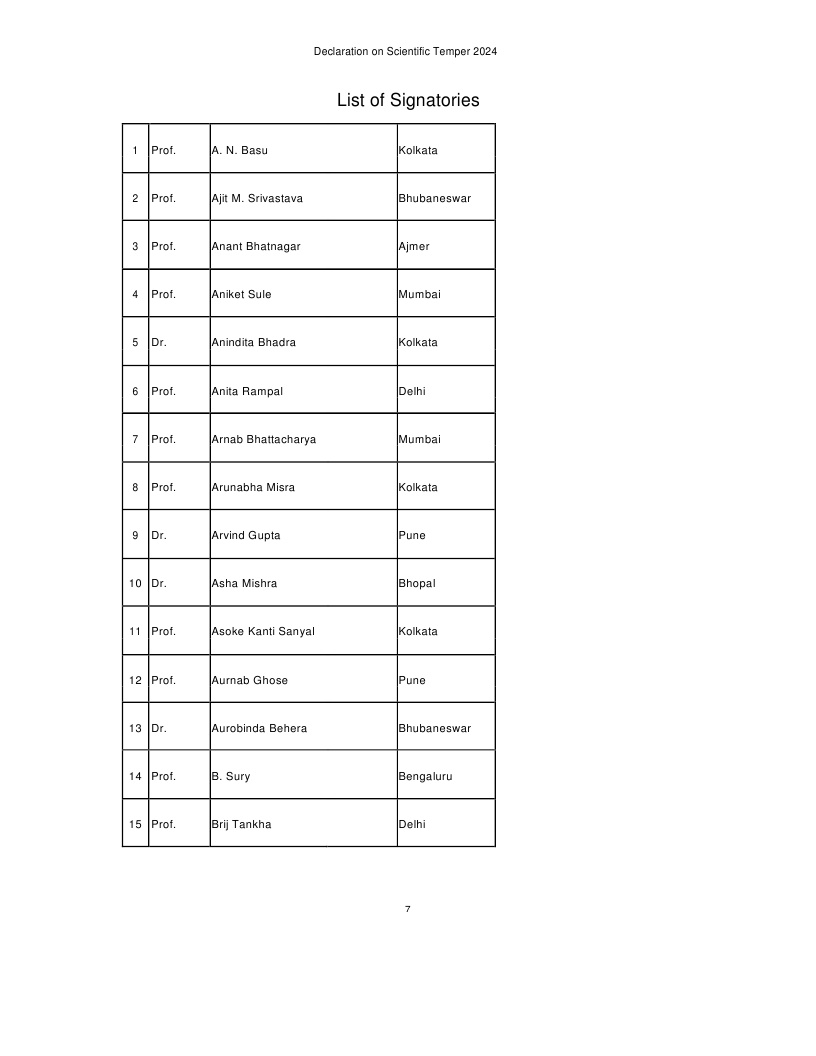
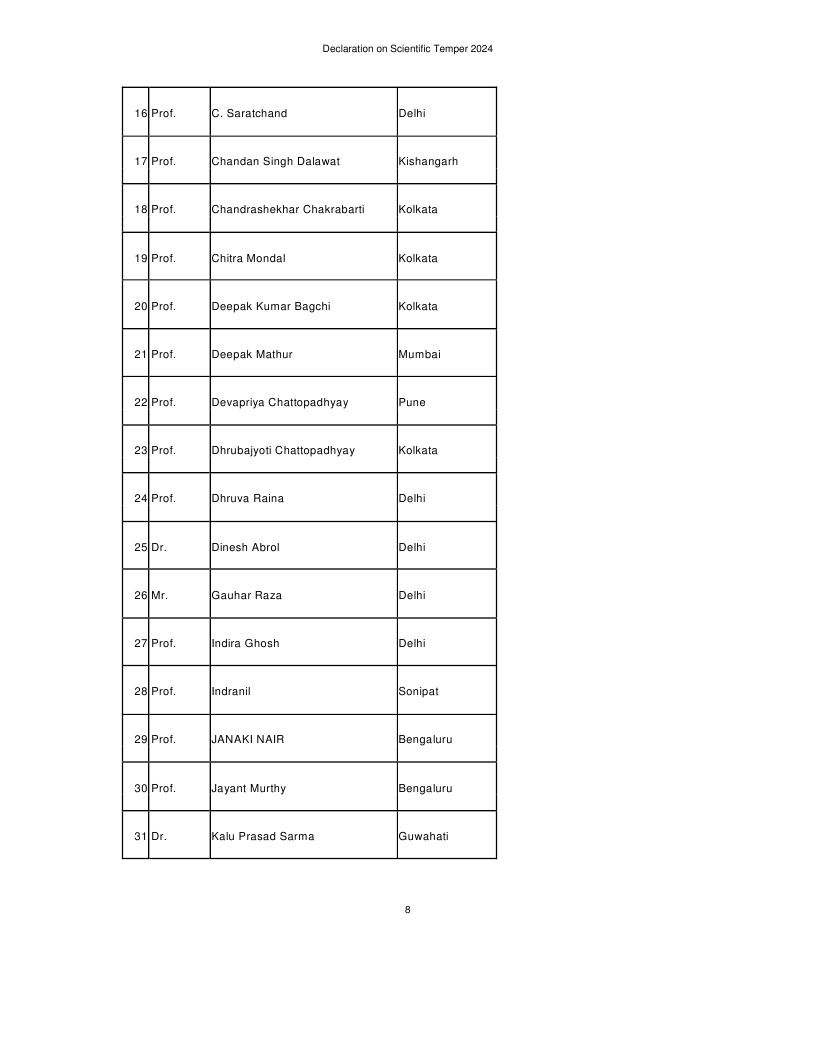
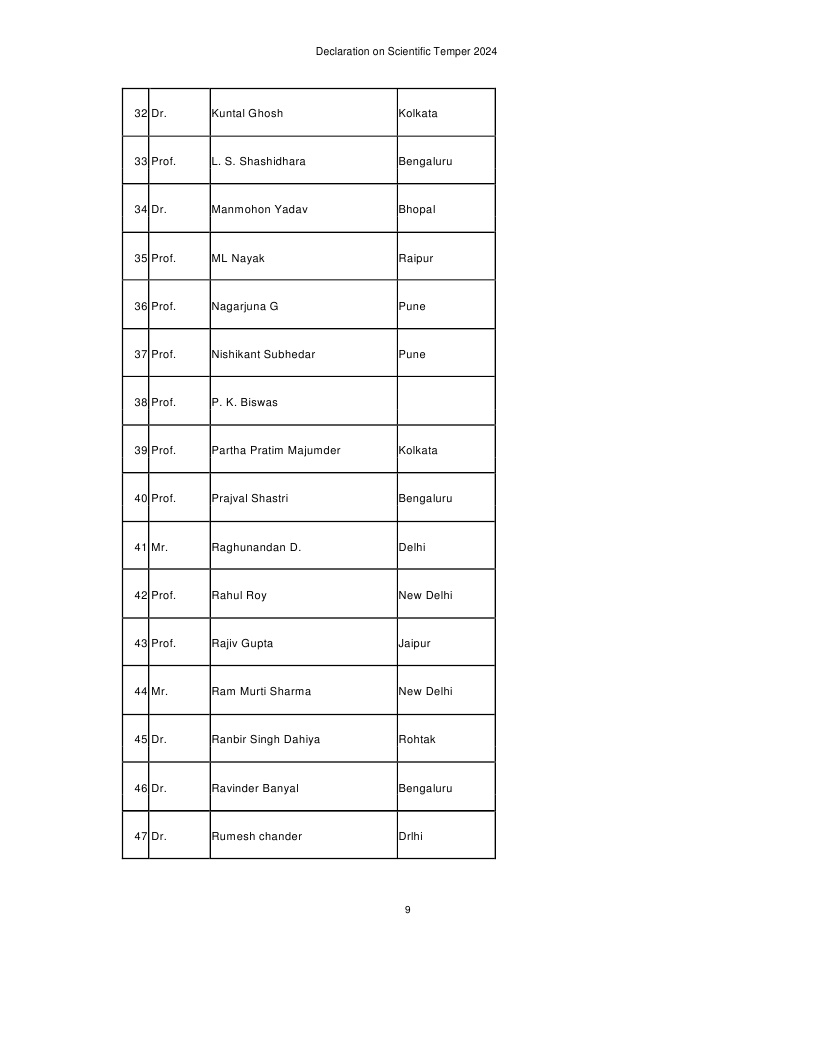
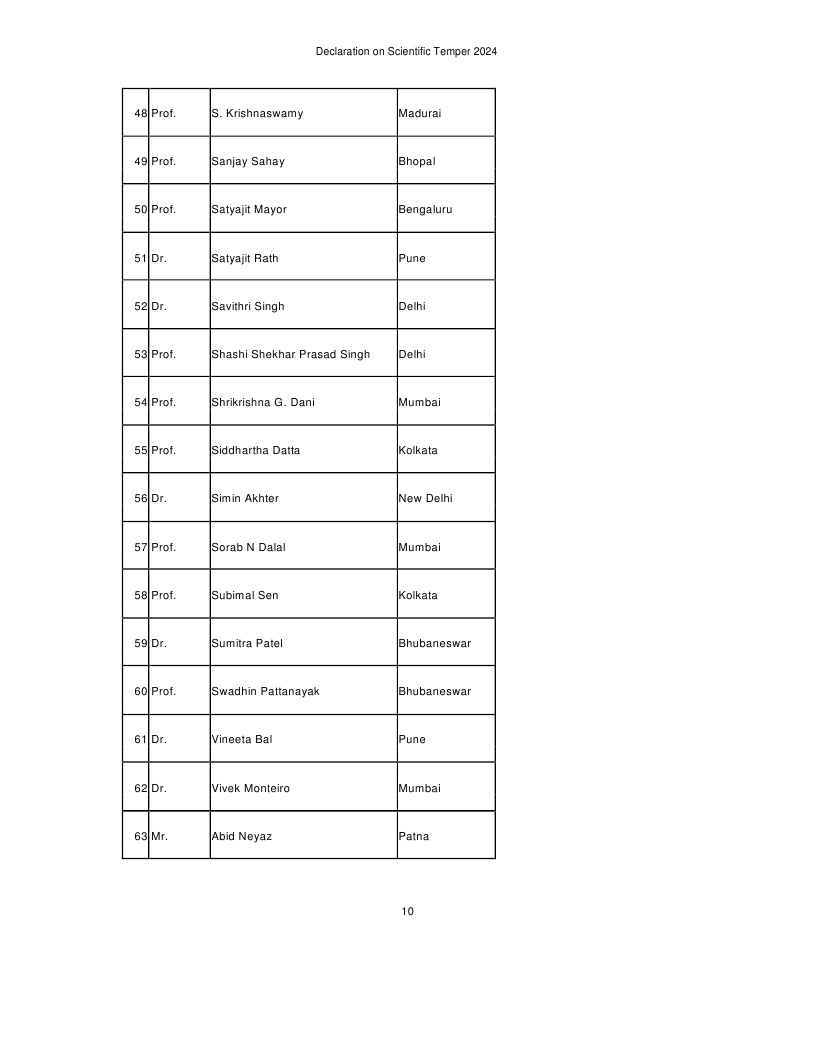
List of Signatories given below


For further information contact
Satyajit Rath 9868877399
Asha Mishra 9425302012
Arunabh Mishra 9831105979
Krishnaswamy 8012558638
Aniket Sule 9820273239
Convinced that India that is Bharat grew for several centuries as Hindostan, and where the people of various religions chose to live together after becoming politically independent from the British Empire and experiencing the partition, is not a society of comparative and competitive religious fanaticism;
Certain that Hindostan is not the land of make-believe demands on Astha (the tradition of belief systems) alone, but that Hindostan is also the land of modern interpretations of religion;
Confident that Hindostan is the land of the rich tradition of syncretism (combining different traditions) and of seekers of the Universal Truths in religions, and that the people cherish civilizational heritage and celebrate the unity in diversity in food, dress and language on everyday basis;
Clear that Hindostan is the land where Nastiks and Astiks coexisted, materialistic philosophical traditions, for example, lokayata flourished, and the revolution of equality through Buddhism appealing to large sections of society took root, and where the traditions of rebellion and resistance grew through the teachings of Basava, Kabir, Nanak, Narayana Guru, Periyar and many more, promoted inclusiveness and syncretism of sufi and bhakti spiritual preachers;
Accepting that the people care for the legacy of the freedom movement, constitutional vision, national unity and integrity, and do not doubt that the majority is concerned about economic, ecological and social justice, and they continue to think about fundamental rights and directive principles of state policy enshrined in the Indian Constitution;
Recognizing that the people as bearers of historical knowledge, skills and culture, and as social carriers of agro-food diversity, culinary heritage, dietary selections, continue to enjoy variegated range of food, health and fitness practices, and they would be willing to stand up once again against the bearers of sectarian politics trying to take away their economic, social and political freedoms;
Recalling that the contributions to modern science & technology made by J C Bose, M Visvesvaraya, P C Ray, C V Raman, M N Saha, P C Mahalanobis, S N Bose, S.S. Sokhey, SS Bhatnagar, Homi Bhabha, Vikram Sarabhai, Satish Dhawan and by many others who challenged the colonial order in S&T, and the perspective and strategy of Scientific Policy Resolution (SPR, 1958) which cherished self-reliance and, embraced scientific approach to policymaking, the scientific and technological communities would not let the people suffer unreason and eliminate the space for pluralism and diversity from the world of higher education, science, technology and humanities;
Persuaded that as the post-independent India’s transformative impulses of self-reliance that accommodated the Gandhians, Nehruvians and Leftists to practice their own S&T heuristics for development in the parallel, gave a place to the ethos of scientific temper and humanism in the Indian Constitution, and in the National Curriculum Framework (2005) and in the Right to Education legislation (2008), the Indian S&T community and the people can be mobilized to defend these gains;
Knowing that the ecumenical (promoting unity among religions), cosmopolitan and modern traditions of scientific and technical practice have deep roots in India, the S&T community can be made to appreciate that the sources of ancient and medieval contributions to science involved multi-cultural interactions, and that the attempts to present mythology as history and fiction as science do not resonate well with the people, the vast majority of Indian people can be made to understand how the latest modern construction of the past traditions is to present an ideology that glosses over and hides the inequalities and exploitation based on caste, class, gender and community;
Recognising that as the people resisted Brahmanism and caste oppression in the ancient and medieval times, the latest attempts to cultivate and impose the irrational and unreasonable ideas on the Indian Women, Youth, Adivasis and Dalits can also be defeated among the people across North, South, East and West of India by mobilizing the people against the assault on scientific temper in the relevant spheres of school and higher education, scientific research and science popularisation;
Feeling alarmed at the Union Government’s blatant unconstitutional attempts to impose on the states the National Education Policy (NEP, 2020), that has the potential to damage irreparably the national character and destroy the secular and democratic contributions of Indian education, the Peoples’ Science Movements (PSMs) call upon the state governments to resist the efforts that sow the seeds of hatred and conformism deep into the mind of the young under the influence of the idea of Hindutava – a destructor of social progress and universal brotherhood/sisterhood, and rededicate themselves to developing quality education with public purposes of national importance
As PSMs,
We solemnly affirm our constitutional right to defend the integrity of Article 51 A(h), and to ensure that the investments in education, science, technology, humanities and arts are considerably enhanced and directed to work for the realization of the scientific temper/outlook[1], for the cultivation of linguistic and socio-cultural diversity, for the universally cherished message of love (‘Vasudhaiva Kutumbakam’ – the world is one family’ ) and for the secular and socialist idea of India and for the reduction of inequalities;
We will contribute to the movements seeking economic, social and ecological justice, and work for the dignified livelihood for the Indian people as a whole through education and research, commit to redouble our own efforts for the promotion of progressive anti-imperialist nationalism, and to strengthen the role and contribution of Indian S&T institutions in the processes of decision making and evaluation of the socio-economic policies under implementation;
We continue with the work started by Dara Shikoh, Savitribai and Jyotriba Phule, Ramabai, Rabindranath Tagore, Nehru, Mahatma Gandhi, Periyar, Bhim Rao Ambedkar, EMS Namboodripad, Ashfaqullah, Bhagat Singh, Subhas Bose, Meghnath Saha, S.S Bhatnagar, Homi Bhabha, S.S. Sokhey, Vikram Sarabhai Husain Zaheer and many others who stood their ground and established the edifice of post-independence period modern S&T institutions, and helped the people to realize the idea of India and the legacy of progressive traditions of the freedom movement;
Mobilize the scientific community to stand up for academic freedom, and actively collaborate with the democratic movement and civil society to defend civil liberties and democratic rights, freedom of expression, organization, representation and struggle through constitutional means, and expose and isolate the forces supporting the babas spreading fatalism and unreason,
Collaborate and work with the rationalists, scholars, academics, scientists, technologists, social scientists, teachers of humanities and sciences, and professionals about the way forward for the realization of the above stated goals of social progress, propose policies, build institutions and establish a standing mechanism to pursue the challenge of cultivation of scientific temper, humanism and world peace.
[1] The term scientific temper is broadly defined as “a modest open-minded temper—a temper ever ready to welcome new light, new knowledge, new experiments, even when their results are unfavourable to preconceived opinions and long-cherished theories.
For further information contact
Satyajit Rath 9868877399
Asha Mishra 9425302012
Arunabh Mishra 9831105979
Krishnaswamy 8012558638