Declaration and Resolution on Scientific Temper

Click here for English pdf  of the Declaration of Statement on Scientific Temper with signatories 


Other languages: Tamil Bengali Telugu


Click here for English pdf of the Resolution adopted along with the Declaration on Scientific Temper 


Other languages: Tamil    Bengali  


Leaflet/Powerpoint distributed about the Declaration/Resolution in  Tamil  Bengali 


Adopted at “Campaign for scientific temper culmination program and National convention for declaration on scientific temper”

held on 28th Feb 2024 at Kolkata


Statement on Scientific Temper in the Current Context

Executive Summary There is an urgent need for a renewed commitment to evidence-based reasoning, critical thinking and a scientific approach in India, especially amidst growing socio-political movements that challenge a scientific temper and universal knowledge production based on commonly agreed methods and understanding. Given the changes in society and technology since the earlier declarations on scientific temper in 1981 and 2011, we emphasise the importance of embracing natural and social sciences, humanities, and the rational experiences of ordinary people in the common endeavour to combat the post-truth culture, the intentional promotion of ignorance, and diminishing trust in science exacerbated by misuse of technology. We call for action across three fronts: the State’s role, the involvement of scientific and academic institutions, and combating the undermining of science by the State, the erosion of academic freedom, and the spread of pseudo-science and unscientific beliefs. We urge scientists, intellectuals, and other like-minded individuals to support evidence-based thinking and policy-making and to uphold constitutional values to foster a scientific temper.

Introduction Since the Coonoor Statement on Scientific Temper in 1981 and the Palampur Declaration in 2011, there have been significant socio-political changes in India and around the world. Briefly, these earlier statements had emphasised the importance of fostering a scientific attitude among the people for development and social advancement. Over time, movements promoting scientific temper in India have also evolved in accordance with changing public perceptions of science and technology (S&T).

Recently, new challenges have emerged in India and elsewhere in the world in the form of strong socio-political movements, backed by the State power, that seek to oppose any scientific approach, evidence-based reasoning or, indeed, any perspective that acknowledges universal scientific knowledge. Globally, a post-truth culture is spreading, marked by a deliberate spreading of ignorance and an anti-intellectual atmosphere, along with a diminishing trust in science. It is ironic that technology, part of the broad umbrella of science, is being harnessed to support these trends through social media, such that manufactured sentiment, prejudice, false narratives, baseless opinions and conspiracy theories gain acceptance as valid ways of thinking.

Against this background, the current situation requires a renewed commitment to robust evidence-based reasoning, drawing from accumulated knowledge in the natural and social sciences, and humanities, as well as from the know-how and rational experiences of working people. Such reasoning aligns with well-recognized methodologies of different disciplines, including emerging interdisciplinary research, applicable not only in academic environments, but also in public discourse and understanding. Both scientists and lay practitioners need to actively embrace and popularise these methods considering the new socio-political realities in India.

This contemporary statement on Scientific Temper has become essential, to address present challenges. This statement shall not undertake a critical review of the previous statements / declarations or debate their points. Instead, it acknowledges past debates and critiques, incorporating their essence into the current statement, recognizing the commonality of scientific disciplines and their methodologies. Rather than revisiting old debates, the focus here is on delineating the significant challenges faced in contemporary India for the constitutionally mandated task of promoting scientific temper, the spirit of inquiry, and humanism. Knowledge production and advancement through purposeful discovery and evidence-based reasoning, including thorough consideration of diverse opinions, is currently under severe threat both in academia and in society at large.

Dangerous new theatre As noted earlier, the arena for fostering scientific temper has evolved significantly in recent decades, becoming increasingly contested, including aggressive socio-cultural forces as well as governmental policies and administrative measures antagonistic to scientific temper. The current situation in India demands critical understanding and action on three interrelated fronts: the role of the State and polity, the character and function of scientific research and academic institutions, and malign influences in society and among the general public.

Article 51A(h) of the Constitution of India speaks of the duty of citizens to promote scientific temper. There is concern in some quarters that responsibilities of the State in this regard have not been adequately highlighted. While it might have been assumed that the State’s primary responsibility is implicit when citizens are called upon for certain duties, there is a need for a clearer delineation of the State’s role.

Note: In the declaration, the terms ‘scientists’ and ‘scientific institutions’ are used as terms denoting all natural sciences, social sciences and humanities disciplines, and those others following an evidence-based path of knowledge production and understanding.

Role of the State In the initial post-Independence decades, the Indian State placed significant trust in scientists1 and scientific institutions. Development policies were evidence-driven, with research institutions and centres of excellence enjoying high priority and prestige, and enjoying substantial autonomy. Documents like the Industrial Policy Resolution and a unique Scientific Policy Resolution were foundational to planned development, guided by a multidisciplinary group of experts in the Planning Commission. Independent scientists and social scientists, both from India and abroad, were involved in policy-making, underlining the importance given to science and evidence-based policy-making. Notably, religion played a minimal role in state affairs, and secularism, defined as non-discrimination and equal respect for all religions, was practised. However, the evils of casteism and communalism have never been properly eliminated.

However, in subsequent years, bureaucratism, elitism, and a techno-fix mentality crept into the system, creating something of a divide between scientists and the general public. Trust in scientific institutions also eroded as a perception grew that “establishment science” primarily served officialdom and corporate interests, rather than the public good as supported by verifiable data. During this period, academic, professional, and informed activist voices in civil society critiqued official narratives, influencing public opinion and contributing to critical thinking and evidence-based policymaking. While the State may not have proactively cultivated scientific temper, it engaged with and supported activities to popularise science among the wider public and children. The State also provided considerable space in governance and public discourse for non-official scientific, expert, and informed lay opinion.

Undermining science and a scientific approach   Presently, the State displays a stark departure from this earlier stance. Government and its various organs now actively oppose a scientific approach, independent or critical thinking, and evidence-based thinking and policy-making. This antagonistic stance is widely and persistently communicated to the public through various means, perpetuating such attitudes. State support for research and development (R&D), already below comparable countries as a percentage of GDP, has hit historic lows, raising serious concerns about India’s future in the knowledge era. Domestic assembly by cheap labour is misrepresented as self-reliance, thus also underplaying the need for research and knowledge production.

Funding, fellowships, and independent research face severe cuts in academic and research institutions, burdened by overpowering bureaucratic structures. Career advancement now favours adherence to dominant ideologies, sycophancy, and obedience to government directives over adherence to imperatives arising from domain expertise and research-based insights. Development data and India’s position in reputed international rankings are contested on spurious grounds. Similar data generated in India, even by government institutions, are rejected or manipulated to fit political narratives. On numerous issues, the government claims to lack data, but still proceeds with policy decisions. Open discussions in higher learning institutions are discouraged, hindering critical thinking, pluralism, and academic freedom.

Beyond image management, these tendencies undermine a scientific approach and evidence-based policymaking, demoralising the knowledge production community and fostering anti-intellectual attitudes.

The State and allied social forces directly undermine science and its methods among the public. Unscientific claims by prominent figures in political circles, boasting of imaginary technological achievements and exaggerated ideas about ancient Indian knowledge, are used to build and support a hyper-nationalist narrative. These assertions lack evidence, relying on ambiguous mythological references and dubious interpretations of ancient texts, often draped in quasi-religious cover so as to suppress dissenting voices. Such fanciful and boastful claims undermine many actual substantial contributions of ancient India emanating from various cultural streams and covering intellectual as well as artisanal and technical accomplishments. Critics of such claims are readily branded as anti-national or westernised, questioning both history and science, and undermining the scientific method. Dissent and plurality of opinion, known to be enabling conditions for intellectual progress, are presently under threat.

Assault on the education sector It is disheartening to witness these trends now being introduced into the formal education system, potentially influencing an entire generation unless effectively countered. School textbooks and readings in higher education are undergoing revisions that promote the idea of the unquestioned superiority of knowledge in ancient India, while downplaying the role of other civilizations and their groundbreaking contributions. Whereas addressing Euro-centrism and acknowledging the contributions from ancient India, China, and other “eastern” civilizations is essential, denying the emergence of modern science and technology and the industrial revolution, and the factors leading to it, is not only untruthful but also misleading. The giant strides of modern science and technology cannot be undermined or replaced by fictional narratives, as seen in revised school textbooks of agencies at the Centre and in various states.

These revised textbooks also omit chapters on crucial historical, societal, economic, and ecological issues in India. In an examination-oriented system not fostering critical thinking, this leaves students ill-prepared for higher studies or research and for their roles as informed citizens contributing to national development.

In higher education, mandatory courses on “traditional knowledge systems” are being introduced, presenting a-historical and distorted accounts of knowledge in ancient India. These courses exclusively glorify the Vedic-Sanskritic tradition, neglecting other cultural streams in ancient India and completely disregarding the significant generation of new knowledge in mediaeval India, out of prejudice against particular religious and cultural

streams. This deliberate slant aims to erase or rewrite historical evidence and obstruct critical thinking, leaving students and citizens vulnerable to bias and instilling a distorted view of syncretic Indian traditions and multicultural reality. In the long run, this will result in incalculable damage to the progress of Indian science and to social harmony.

Societal attack In recent decades, India has witnessed the growth of socio-religious orthodoxy, traditionalism, and revivalism, fueled by majoritarian socio-political forces. Traditional religious practices, festivals, and communal forms of organisation have proliferated. Numerous “Godmen” have emerged with substantial resources, sizable followings, and at times, significant political backing. These cults, despite projecting high-thinking spiritualism, have propagated superstitions, pseudo-scientific beliefs, and socio-religious orthodoxy.

Today, social forces aligned with the ruling establishment and supported by the State, disseminate pseudo-science and a belief in mythology as history. False narratives are being used to construct a unitary majoritarian religion and culture, contrary to the diverse religious beliefs even among the majority community. False and unscientific narratives, such as vegetarianism as a dominant “traditional” practice, are being promoted, contradicting scientific surveys conducted by official agencies.

During the COVID pandemic, superstitions and pseudo-scientific notions related to health were actively promoted under the guise of endorsing “traditional” or ancient Indian health systems while implicitly or explicitly criticising modern medicine. Highly placed authorities encouraged practices like lighting lamps and clanging utensils to ward off the virus, with social media amplifying purported “proof” of efficacy, such as recordings of “cosmic vibrations” by NASA. Other pseudo-scientific claims are similarly backed by false evidence supposedly coming from reputed scientific agencies. Artificial creation of long-lost legendary ancient rivers is being undertaken to perpetuate mythology. All these exploit the enduring respect common people hold for science and its truth value. The forces of unreason seek to sow confusion regarding evidence and scientific methods.

Social media and digital technologies play a pivotal role in the State-backed dissemination of unscientific and anti-scientific views, pseudo-science, false narratives, and conspiracy theories aimed at undermining a scientific approach.

In closing, it is important to address the idea that “other worldly” religious beliefs pose the only or major obstacle to fostering a scientific temper in India. Faith poses many challenges which science or rationalism may not always be able to tackle, insofar as faith itself may be defined or perceived as belonging to a non-physical domain. Freedom of religion or Individual faith may indeed be accorded due recognition. At the same time, discriminatory practices or those that impinge on others’ rights or affect public order, must be opposed, and their irrational basis explained. Obscurantism persists due to ongoing weaknesses in society itself, highlighting larger battles that need to be fought, of which the present one may be just a part. Given the organised challenges to a scientific approach discussed earlier, a more focused and targeted strategy is required for the campaign to promote or strengthen a scientific temper.

Declaration We scientists and intellectuals across disciplines, activists and all individuals passionate about spreading a scientific temper, acknowledge that the struggle to promote a scientific temper is wide-ranging and embraces many dimensions. Yet we also understand that, given the grave threats posed in the current context, the major challenge in this period is to combat and roll back these threats. We realise the imminent danger posed by organised multi-pronged attacks to undermine a scientific attitude among the populace. Such attacks not only disseminate pseudo-science, blind faith, and unreason but also promote obscurantism, communitarian prejudices, and discrimination, striking at the core of a humanist approach. False narratives, unfounded opinions, and a cloak of religiosity are wielded to instil adherence to a manufactured, homogenised, majoritarian idea of India.

We, the signatories of this declaration, re-attest the importance of working towards promotion of scientific temper in society. We recognise the grassroots work put in by people’s science movements, other like-minded organisations and dedicated individuals, and commit to support these and other similar efforts. We appeal to like-minded individuals in academia and research institutions, the bureaucracy, and the political class to take a stand upholding constitutional values.


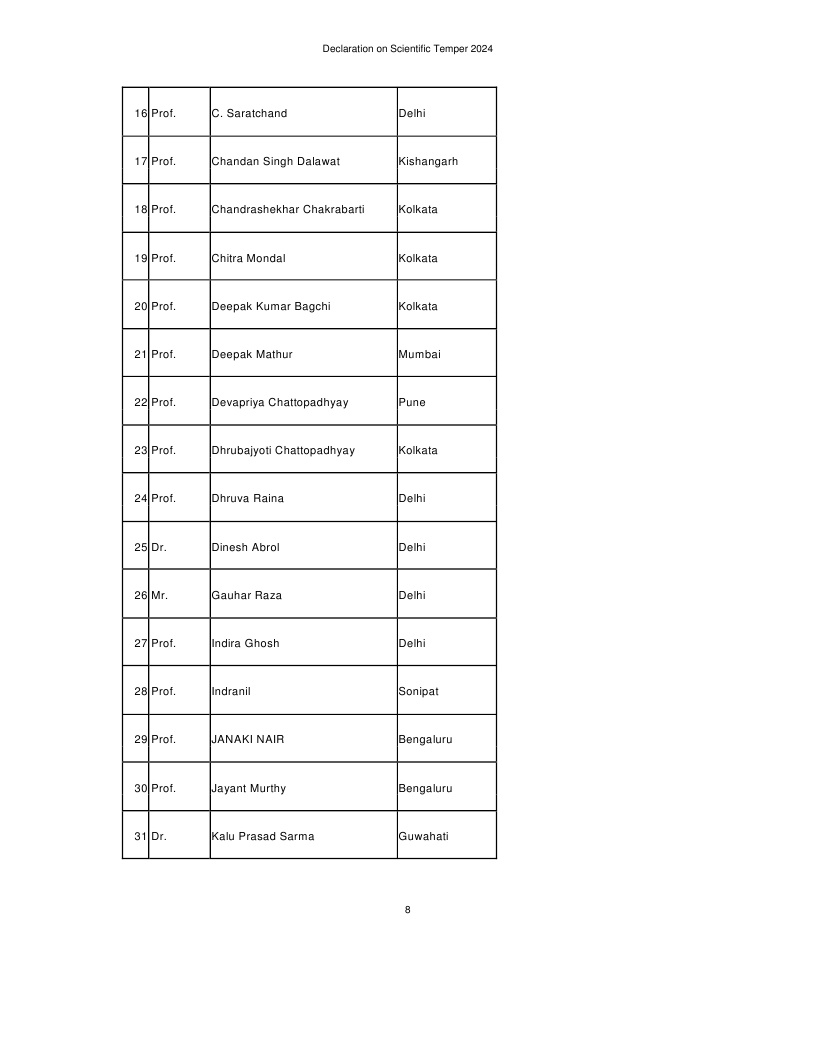
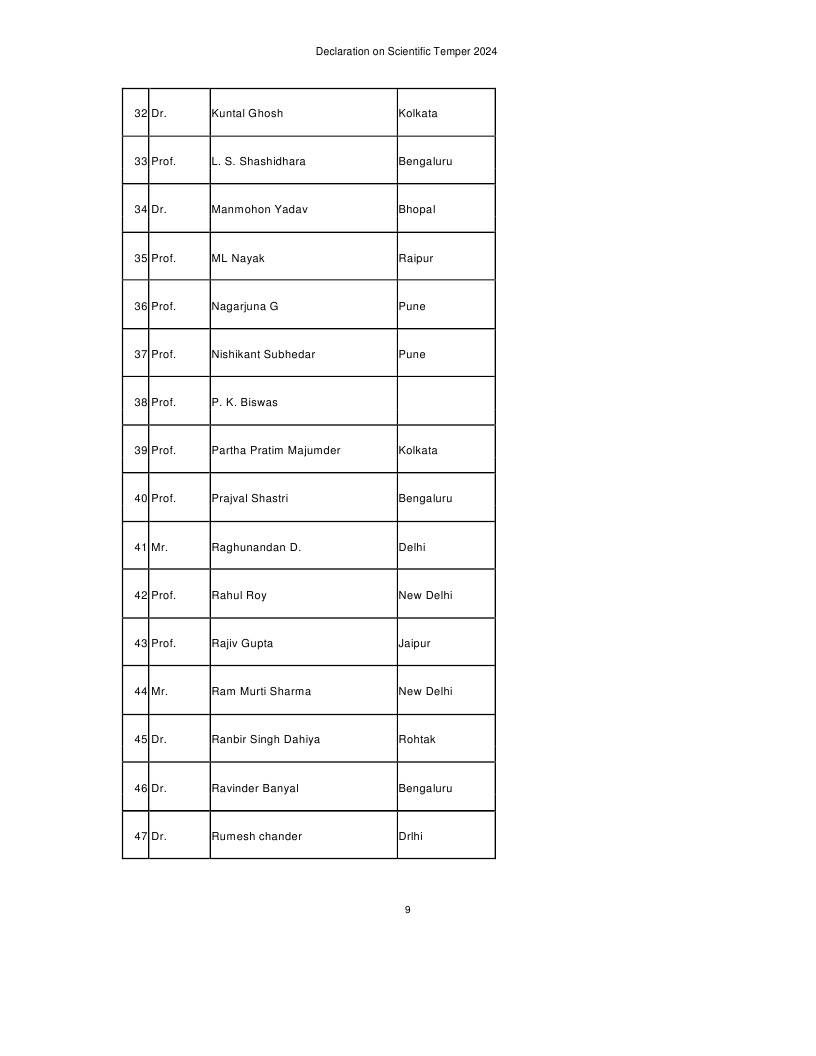
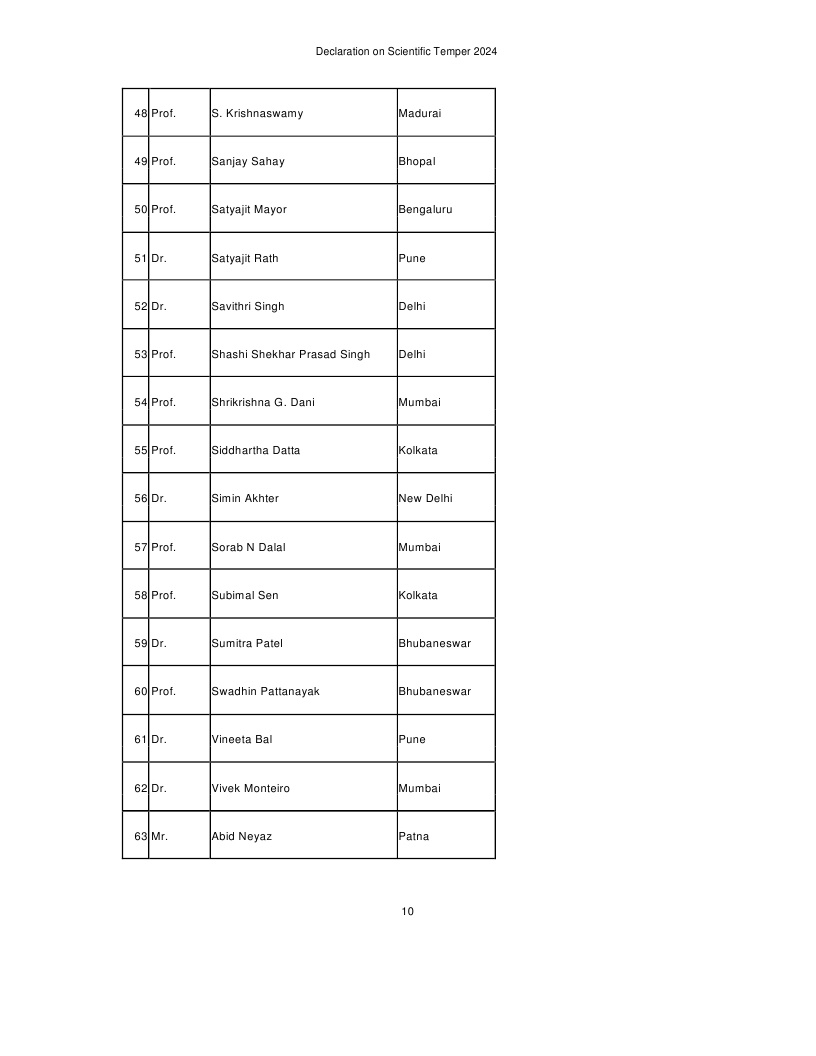
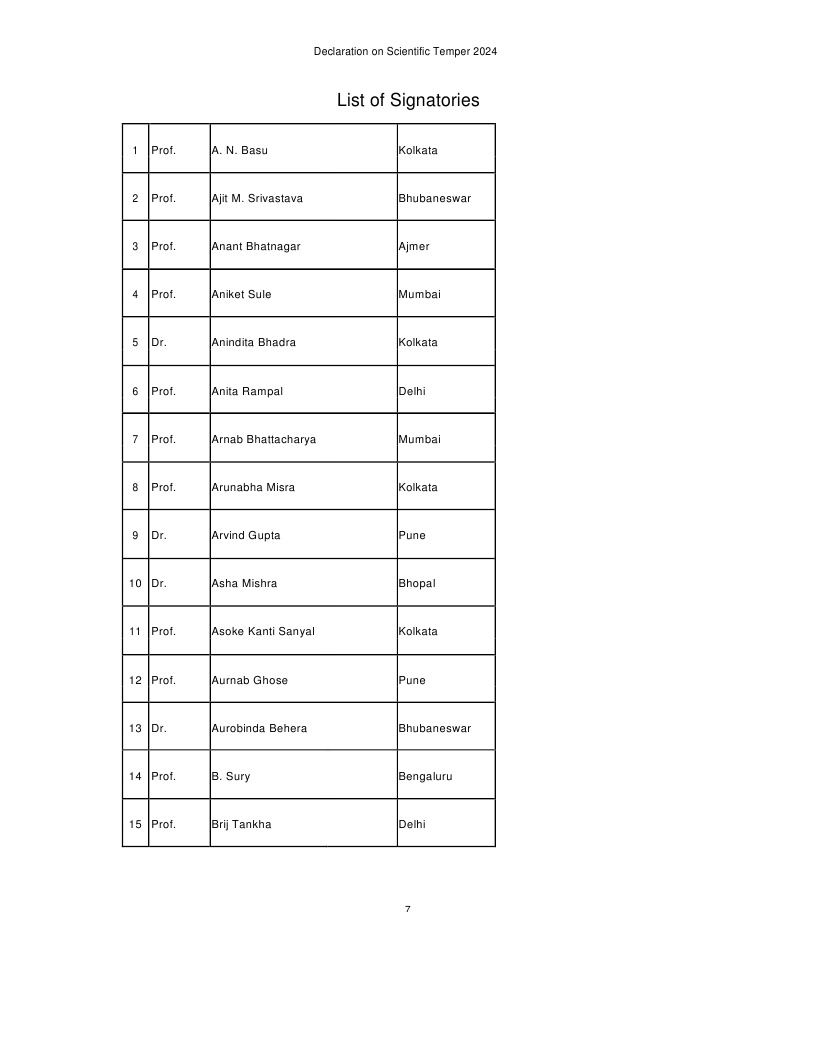
List of Signatories given below 


For further information contact

Satyajit Rath  9868877399

Asha Mishra   9425302012

Arunabh Mishra  9831105979

Krishnaswamy 8012558638
Aniket Sule  9820273239


Resolution adopted by the AIPSN along with the  “Statement on Scientific Temper Declaration”

in the  “Campaign for scientific temper culmination program and National convention for declaration on scientific temper”

held on 28th Feb 2024 at Kolkata


Convinced that India that is Bharat grew for several centuries as Hindostan, and where the people of various religions chose to live together after becoming politically independent from the British Empire and experiencing the partition, is not  a society of comparative and competitive religious fanaticism;

Certain that Hindostan is not the land of make-believe demands on Astha (the tradition of belief systems) alone, but that Hindostan is also the land of modern interpretations of religion;

Confident that Hindostan is the land of the rich tradition of syncretism (combining different traditions) and of seekers of the Universal Truths in religions, and that the people cherish civilizational heritage and celebrate the unity in diversity in food, dress and language on everyday basis;

Clear that Hindostan is the land where Nastiks and Astiks coexisted, materialistic philosophical traditions, for example, lokayata flourished, and the revolution of equality through Buddhism appealing to large sections of society took root, and where the traditions of rebellion and resistance grew through the teachings of Basava, Kabir, Nanak, Narayana Guru, Periyar and many more, promoted inclusiveness and syncretism of sufi and bhakti spiritual preachers;

Accepting that the people care for the legacy of the freedom movement, constitutional vision, national unity and integrity, and do not doubt that the majority is concerned about economic, ecological and social justice, and they continue to think about fundamental rights and directive principles of state policy enshrined in the Indian Constitution;

Recognizing that the people as bearers of historical knowledge, skills and culture, and as social carriers of agro-food diversity, culinary heritage, dietary selections, continue to enjoy variegated range of food, health and fitness practices, and they would be willing to stand up once again against the bearers of sectarian politics trying to take away their economic, social and political freedoms;

Recalling that the contributions to modern science & technology made by J C Bose,  M Visvesvaraya, P C Ray, C V Raman, M N Saha, P C Mahalanobis, S N Bose, S.S. Sokhey, SS Bhatnagar, Homi Bhabha,  Vikram Sarabhai, Satish Dhawan and by many others who challenged the colonial order in S&T, and the perspective and strategy of Scientific Policy Resolution (SPR, 1958) which cherished self-reliance and, embraced scientific approach to policymaking, the scientific and technological communities would not let the people suffer unreason and eliminate the space for pluralism and diversity from the world of higher education, science, technology and humanities;

Persuaded that as the post-independent India’s transformative impulses of self-reliance that accommodated the Gandhians, Nehruvians and Leftists to practice their own S&T heuristics for development in the parallel, gave a place to the ethos of scientific temper and humanism in the Indian Constitution, and in the National Curriculum Framework (2005) and in the Right to Education legislation (2008), the Indian S&T community and the people can be mobilized to defend these gains;

Knowing that the ecumenical (promoting unity among religions), cosmopolitan and modern traditions of scientific and technical practice have deep roots in India, the S&T community can be made to appreciate that the sources of ancient and medieval contributions to science involved multi-cultural interactions, and that the attempts to present mythology as history and fiction as science do not resonate well with the people, the vast majority of Indian people can be made to understand how the latest modern construction of the past traditions is to present an ideology that glosses over and hides the inequalities and exploitation based on caste, class, gender and community;

Recognising that as the people resisted Brahmanism and caste oppression in the ancient and medieval times, the latest attempts to cultivate and impose the irrational and unreasonable ideas on the Indian Women, Youth, Adivasis and Dalits can also be defeated among the people across North, South, East and West of India by mobilizing the people against the assault on scientific temper in the relevant spheres of school and higher education, scientific research and science popularisation;

Feeling alarmed at the Union Government’s blatant unconstitutional attempts to impose on the states the National Education Policy (NEP, 2020), that has the potential to damage irreparably the national character and destroy the secular and democratic contributions of Indian education, the Peoples’ Science Movements (PSMs) call upon the state governments to resist the efforts that sow the seeds of hatred and conformism deep into the mind of the young under the influence of the idea of Hindutava – a destructor of social progress and universal brotherhood/sisterhood, and rededicate themselves to developing quality education with public purposes of national importance

As PSMs,

We solemnly affirm our constitutional right to defend the integrity of Article 51 A(h), and to ensure that the investments in education, science, technology, humanities and arts are considerably enhanced and directed to work for the realization of the scientific temper/outlook[1], for the cultivation of linguistic and socio-cultural diversity, for the universally cherished message of love (‘Vasudhaiva Kutumbakam’ – the world is one family’ ) and for the secular and socialist idea of India and for the reduction of inequalities;

We will contribute to the movements seeking economic, social and ecological justice, and work for the dignified livelihood for the Indian people as a whole through education and research, commit to redouble our own efforts for the promotion of progressive anti-imperialist nationalism, and to strengthen the role and contribution of Indian S&T institutions in the processes of decision making and evaluation of the socio-economic policies under implementation;

We continue with the work started by Dara Shikoh, Savitribai and Jyotriba Phule, Ramabai, Rabindranath Tagore, Nehru, Mahatma Gandhi, Periyar, Bhim Rao Ambedkar, EMS Namboodripad, Ashfaqullah, Bhagat Singh, Subhas Bose, Meghnath Saha, S.S Bhatnagar, Homi Bhabha, S.S. Sokhey, Vikram Sarabhai Husain Zaheer and many others who stood their ground and established the edifice of post-independence period modern S&T institutions, and helped the people to realize the idea of India and the legacy of progressive traditions of the freedom movement;

Mobilize the scientific community to stand up for academic freedom, and actively collaborate with the democratic movement and civil society to defend civil liberties and democratic rights, freedom of expression, organization, representation and struggle through constitutional means, and expose and isolate the forces supporting the babas spreading fatalism and unreason,

Collaborate and work with the rationalists, scholars, academics, scientists, technologists, social scientists, teachers of humanities and sciences,  and professionals about the way forward for the realization of the above stated goals of social progress, propose policies, build institutions and establish a standing mechanism to pursue the challenge of cultivation of scientific temper,  humanism and world peace.

[1] The term scientific temper is broadly defined as “a modest open-minded temper—a temper ever ready to welcome new light, new knowledge, new experiments, even when their results are unfavourable to preconceived opinions and long-cherished theories.

For further information contact

Satyajit Rath  9868877399

Asha Mishra   9425302012

Arunabh Mishra  9831105979

Krishnaswamy 8012558638


AIPSN Foundation Day Celebrations

Click here to see a brief profile on AIPSN and the 1st AIPSC held on 11 Feb 1988 in YouTube 

2024 AIPSN Foundation Day Webinar Series


Click here to see the link to Prabir’s talk from which two 5 minute excerpts were played in the Inaugural Webinar on AIPSN Foundation Day


11febPrabir

Earlier events

click here to download the poster for the Feb 11 storynar in English and in Hindi 

click here to download the book “Science for Social Revolution”

AIPSN Calendar 2024

AIPSN Calendar 2024

To view the AIPSN Calendar click here


Click to see writeup of calendar in Tamil


Dear Friends
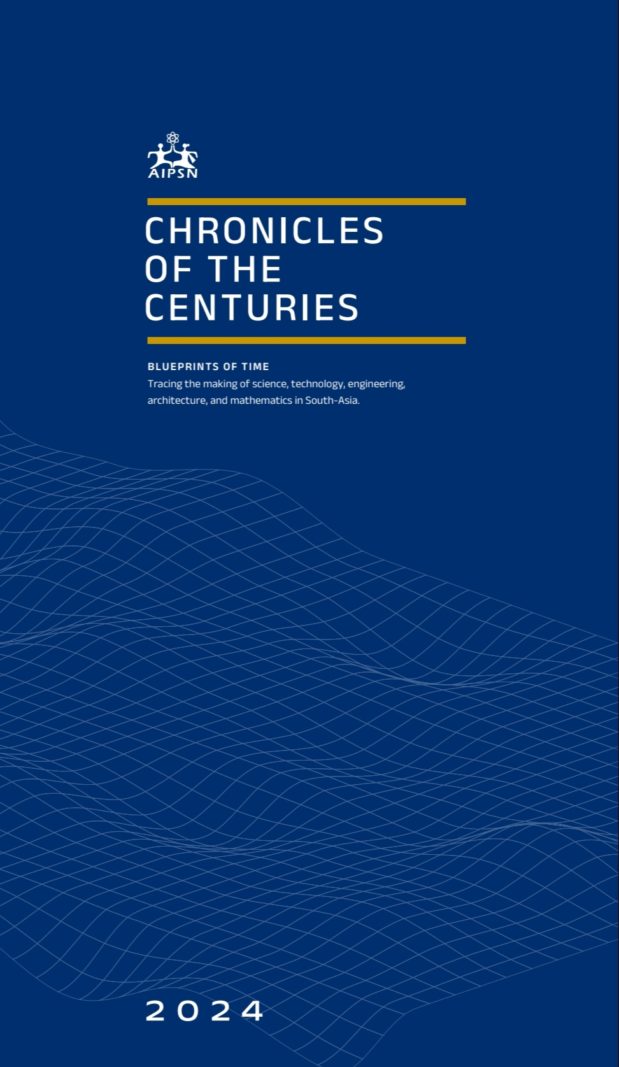
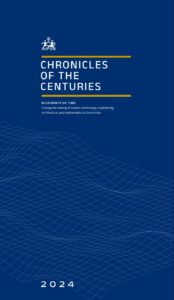
AIPSN is happy to put in your hands the “Chronicles of the Centuries”, a wall calendar for 2024 which traces the history of the development of science and technology in our subcontinent.

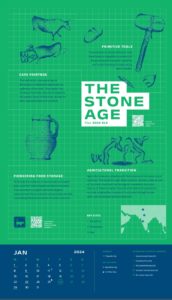
Based on the award winning serial ” Bharat ki Chhaap” it covers the period of each episode in one month of the calendar. Beautifully designed by “Design Orb”, with unique features like a direct QR code link to the relevant serial episode, the calendar will become a doorway for an exciting multimedia tour of our science history. It is especially relevant for schools, colleges, and educational institutions.


The message of the calendar is the message of “Sabka desh, Hamara Desh” and “Scientific Temper for All” as the Idea of India for meeting contemporary challenges facing the country and humankind.


We have prepared this as  part of our Campaign for Scientific Temper. Thanks to the committee of 4 members Vivek Monterio, Arunabh Mishra, Sabyasachi Chatterjee and T V Venkateswaran for their efforts in developing this Calender. Thanks to Navnirmiti for their contribution in making the same..


The Cost of the hard copy of the calendar is Rs 175 for copies less than 50. Please send the amount to the account number given below. Send an email with the transfer details and address to post the calendar  to aipsnbooks@gmail.com

The account no is given below .

All India People’s Science Network
A/c No-35570899619
Bank Name- SBI
IFSC- SBIN0004415
Branch- Gulmohar Colony, Bhopal

Institutional or bulk orders for more than 50 copies please send  enquiries to aipsnbooks@gmail.com

Regards
Asha Mishra

General Secretary AIPSN

Cover of calendar 2024

Cover of Calendar 2024

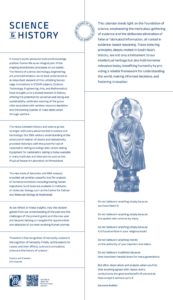
First page of Calendar 2024

First page of Calendar 2024

Jan 2024 of calendar

Jan 2024 of calendar

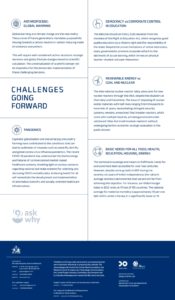
End page of Calendar 2024

End page of Calendar 2024

AIPSN Demands recall of NCERT special modules on Chandrayaan 3: Modules filled with Errors and Pseudoscientific Claims

Click here to see press coverage in Science

Click here for the PRESS RELEASE in English  


To see the pdf of the Statement click here English 


All India Peoples Science Network (AIPSN) Statement

30 Oct 2023


AIPSN Demands recall of NCERT special modules on Chandrayaan 3:

Modules filled with errors and pseudoscientific claims


ON 17 October 2023, NCERT released a number of special modules in English and Hindi on Chandrayaan 3, for circulating to millions of school students as supplementary reading material. However due to severe criticism as seen in  press and media coverage the NCERT initially took down the webpage on the modules but after the Government defended the modules in a PIB release on 25 October saying “Mythology and philosophy put forward ideas and ideas lead to innovation and research” the website came back online!  These modules were targeted towards different learning stages as described in NEP 2020 (Foundational, Primary, Middle School, Secondary and Higher Secondary). Shockingly, many scientific and technical errors occur in the content of these modules, some of which are pointed out below. In addition, there are pseudo-scientific claims and misleading scientific content, and even a reference to a Nazi scientist, quite out of sync with the usual standards of material from NCERT, apart from numerous grammatical errors in the English versions.

There is a clear danger that this wrong information will be transmitted to students as-is and cause real harm. Or worse: the content is so badly written that students will be put off this exciting field.

Members of the scientific community and all rationally minded citizens should summarily reject this shoddily prepared material. The way NCERT reacted after the criticism to withdraw them and then put them back on after the government defended the mythology must not happen again. The demand is that NCERT recalls all these modules at once permanently.


List of Scientific Errors, Pseudoscientific claims and Falsehoods in the NCERT modules on Chandrayaan

 Foundational Stage (code 1.1F, kindergarten and grades 1-2):

    1. Text: (for Chandrayaan 2) … this time due to a malfunction in the parts of the rocket, it lost contact with the Earth …

Reality: The launcher rocket worked perfectly, and although the lander failed, the orbiter module of Chandrayaan kept working and ISRO kept receiving data.

  1. Primary Stage (code 1.2P, grades 3-5):
    1. Text: this rocket has two major parts—one is Rover and the other is Lander which send us information about the Moon.

Reality: The rocket (LVM3) carried the Chandrayaan 3 spacecraft. The spacecraft  itself had an orbiter and a lander. The rover was kept inside the lander to get released after landing on the Moon.

  1. Middle School Stage (code: 1.3M, grades 6-8):
    1. Text: Literature tells us that it can be traced back through Vymaanika Shastra: ‘Science of Aeronautics’, which reveals that our country had the knowledge of flying vehicles in those days (This book has mind boggling details of construction, working of engines and the gyroscopic systems).

Reality: It has been conclusively shown through research that the origin of the much touted Vymaanika Shastra text can only be traced to the early 20th century and the designs, engines and instruments described in it are completely imaginary, unscientific and useless.

  1. Text: The Vedas, … makes a mention of … these chariots could also fly. The Rig Veda (verses 1.16.47-48) specifically mentions “mechanical birds.” There are various mentions of flying chariots (Rath) and flying vehicles (Vimaan) which were used in battles and wars. All gods … travel from one place to another. These places included earth, heaven, planets and cosmic destinations called ‘Loks’. Such vehicles were said to travel effortlessly in space and without any noise. One such Vimaan is the legendary Pushpak Vimaan (literally the floral chariot) mentioned in Ramayana.

Reality: All these mentions of flying vehicles in various vedic texts and epics are understood to be products of the poets’ imagination. Almost all ancient cultures around the world have literary references about their gods flying in the sky. However, they are not taken as proof of the existence of flying vehicles in ancient times. There is no proof of any human leaving the Earth to travel to space before Uri Gagarin did it in 1961. And the Rgvedic reference given in the text is simply wrong as the 16th sukta of the 1st mandala of Rgveda does not even have 48 verses.

  1. Text: Literary inputs of nature stated above always gave Bharat, as a Nation, an advantage in understanding the significance of space science

Reality: As mentioned above such literary references could be found in multiple ancient cultures and Sarabhai and other scientists’ vision for the Indian space programme was not a product of these poetic inputs. Claiming so would be an insult to the legacy of Sarabhai and pioneering works of many contemporary scientists

  1. Text: It also has peaks that are in constant or near constant sunlight, which creates excellent opportunities for generating power to support lunar activities.

Reality: Although the lunar axis of rotation is almost perpendicular to the ecliptic plane, any mountain peak can be in ‘near constant sunlight’ only if it is almost at the south pole. The landing site of Chandrayaan 3 is more than 500 km away from the lunar south pole. Thus, finding such mountain peaks near the landing site is not possible.

  1. Text: (under activity 1) List out the indigenous materials used in making Chandrayaan-3 a budget-friendly mission.

Reality: ISRO has not publicly released any educational materials regarding this and hence this activity is just a game of guesswork and reproducing jargon from ISRO pages without any understanding.

  1. Text: The ancient Bharatiya texts and discourses contain treasures of scientific knowledge on various disciplines including aeronautics

Reality: As discussed above, these texts are either just poetic imaginations or not ancient at all.

  1. Secondary Stage (codes 1.4S-1.7S, grades 9-10):
    1. Text (code 1.4S): “Where is the Lunar South Pole?” The lunar south pole is the southernmost point on the moon, at 90 degrees south.

Comment: This is tautology, undesirable in any educational text.

  1. Text (code 1.4S): Based on the earlier mission, i.e., ‘orbital mission’ and ‘flyby mission’ it was found that certain dark craters in the south pole …

Comment: If a spacecraft passes close to a celestial body without entering in an orbit around that body, then it is classified as a ‘flyby mission’. Given this classification, no flyby lunar missions have explored the south pole of the moon.

  1. Text (code 1.4S): NASA has described the dark craters as, ‘full of mystery, science and intrigue’.

Comment: This and other similar instances of invoking NASA are name dropping exercises. Using the name to NASA does not add credibility to such nonsense.

  1. Text (code 1.4S): The lunar south pole has many mountains that are not facing earth and are the ideal place to receive such astronomical radio signals from a ground radio observatory.

Comment: This is not related to the Chandrayaan missions. Further, “receive signal from ground observatory” does not make any sense.

  1. Text (code 1.5S): Chaitra month is named after Chitrā nakshatra transiting the

Moon during the period.

Comment: The Nakshatras is the background and it is the moon that transits in the foreground.

  1. Text (code 1.5S): Folklore narrates that on this night, the Moon’s rays possess healing properties, bestowing health and vitality upon those who bask in its luminance.

Comment: Although authors attribute this belief to folklore, it should be  avoided here as it is irrelevant. If it must be mentioned there should be a clear assertion that this claim of the moon’s rays possessing healing properties is not supported scientifically.

  1. Text (code 1.6S): (Activity 1) Prepare a simulation model to make the solar system, planets and satellite. Specially placed the moon with their planets Earth.

Make a Solar System → Locate the sun at the centre of Solar System → Make the elliptical path that orbit the Sun → Locate the planets on each elliptical path → Locate the satellite on each planet that orbit the planet again → Show the Moon of our planet

Comment: Here the level of English is so poor that the meaning is completely lost. How “paths orbit the sun”, how “satellites are located on each planet”, everything is a mystery.  Sentences such as  “locate the satellite on each planet” are meaningless. This is a rehashed version of the activity which was already present in class 8 NCERT book and just retaining the same text as in that book would have been better than this text.

  1. Text (code 1.6S): There are many hypotheses and theories that explain the origin of the moon. The most expected theory suggested that …

Comment: What is meant by “the most expected theory suggested” makes no sense.

  1. Text (code 1.6S): The moon is the brightest and largest heavenly body in our night sky. There are many benefits Earth gets from the moon, the moon moderates Earth’s wobble in its axis, leading to a relatively stable climate. It also creates tides and protects Earth from solar winds, ideal for studying the universe.

Comment: This is a poorly written paragraph which creates a lot of misconceptions. The moon appears to be the largest body, but that is due to its proximity. Moon protecting the earth from the solar wind is also scientifically inaccurate and the second part of that sentence “ideal for studying the universe” does not have any connection to the first, and is meaningless here

  1. Text (code 1.6S): The mission (Chandrayaan 2) discovered an ice sheet in the lunar crater.

Comment: This is total mischaracterisation of the scientific results. The mission confirmed the presence of water molecules. Moreover, “Ice Sheet” refers to a thick layer of only ice, whereas the amount of water in lunar craters is too small to form ice sheets.

  1. Text (code 1.6S): The slogan Chanda mama door ke will be replaced by Chanda mama tour ke near in the near future

Comment: Completely misleading portrayal of how space research will develop in near future. Commercial space tourism is not a priority of ISRO and space tourism (even in near earth orbits) will remain prohibitively expensive for most of the human population at least for another generation or two.

  1. Text (code 1.7S): A rocket’s engine produces a thrust of 20,000 Newtons to lift a payload weighing 2,000 kg. If the gravitational force on Earth is approximately 9.81/29.81m/s2, will the rocket overcome Earth’s gravity to Ascend?
  2. Comment: Look at the second line of the question. It gives two numbers. Out of that 9.81 corresponds to gravitational acceleration at the earth’s surface and 29.81 is the earth’s orbital speed; they are followed by a unit of acceleration. But the question says this is the gravitational force. Does it make any sense?
  3. Text (code 1.7S): On Earth, it takes about 24 hours for the planet to make one rotation on its own axis. … This completes a full-day cycle on Earth. Similarly, one face of the moon remains exposed to sunlight for one lunar day which equals approximately 14 days on Earth.
  4. Comment: One lunar day is 27.3 Earth days. The 14 day period is approximately half a lunar day. Calling it one lunar day is inconsistent with the definition of earth day (24 hours) in the same text.
  5. Text (code 1.7S): 240.25 hours or 10 days and 0.25 hours (i.e., 10 days and 6 hours)
  6. Comment: The number in the bracket is 246 hours, not 240.25 hours.


  1. Higher Secondary stage (1.8HS-1.10HS, grades 11-12):
    1. Text (code 1.8HS): Once a rocket reaches the right altitude from the Earth, it injects the satellite or the spacecraft.

Comment: If one says the satellite is injected without mentioning that it is injected into orbit, the meaning of the sentence changes completely.
The correct wording should be: “Once a rocket reaches the right altitude from the Earth, it injects the satellite or the spacecraft into desired orbit.

  1. Text (code 1.8HS): Write a story about what you think who would be found on the moon.

Comment:“Who would be found on the moon”? Did we leave anyone there by mistake? Certainly wrong and a mystery. Perhaps the authors imply ‘what’.

  1. Text (code 1.9HS): These communication satellites are equipped with transponders spanning various frequency bands, including C-band, extended C-band, Ku-band, Ka/Ku band, and S-band.

Comment: Do students know what these bands are? Introducing terms without explanation is not educational.

  1. Text (code 1.9HS): AstroSat––India’s first astronomical space observatory, …

Comment: Funnily, this appears under the section “planetary research”.

  1. Text (code 1.9HS): On Earth, we have a day of 24 hours. It is because the Earth completes one rotation in 24 hours. However, the situation is not the same. It takes nearly 14 Earth days to complete one rotation. The date, August 23, 2023,

marked the commencement of the lunar day.

Comment: The lines should read as “However, the situation is not the same on the Moon. It takes nearly 27.3 Earth days to complete one rotation, so each location on the moon receives sunlight for about 14 earth days continuously. That date marked the commencement of the daylight period for the landing location.”

  1. Text (code 1.10HS): As we delve deeper into this cosmic odyssey, we cannot help but be inspired by the indomitable spirit of Wernher von Braun (father of rocket science), the visionary engineer who transformed dreams of reaching the stars into tangible rockets that breached Earth’s atmosphere. His towering achievements turned the boundless expanse of space into an attainable frontier, where humanity’s yearning for exploration could take flight

Comment: And with that we conveniently join USA to whitewash the fact that von Braun was a nazi scientist who built missiles V2 for Hitler.

  1. Text (code 1.10HS): The shape of the velodrome is like a frustum which a sliced cone is leaving its vertex like a bucket.

Comment: Will students be able to make sense of this grammatically incorrect senseless description?

  1. Text (code 1.10HS): … achieve a desirable speed so that it can reach up to the gravitational field of the moon.

Comment: It should have said “… so that it can reach the gravitational sphere of influence of the moon”, not gravitational field, as the gravitational field extends till infinity.

  1. Text (code 1.10HS): If satellite orbiting around a planet is comparable to the planet, then the binary system (say Earth and Moon) revolves around their common barycenter.

Comment: The bodies will ALWAYS revolve around their common barycenter. If one of the bodies is much more massive than the other body, then the barycenter of the system will be closer to the centre of the large body and hence its motion is not perceptible. That’s all.

  1. Text (code 1.10HS): Let’s assume bigger body (say Earth) is nailed at the origin.

Comment: How do you “nail” Earth at the origin?!


For clarifications contact:

Asha Mishra, General Secretary, AIPSN

gsaipsn@gmail.com, 9425302012, Twitter: @gsaipsn

NCERT special modules on Chandrayaan 3 which are full of errors and pseudoscientific claims

ON 17 October 2023, NCERT released ten  special modules in English and Hindi on Chandrayaan 3, for circulating to millions of school students as supplementary reading material. However due to severe criticism as seen in  press and media coverage the NCERT initially took down the webpage on the modules but after the Government defended the modules in a PIB release on 25 October saying “Mythology and philosophy put forward ideas and ideas lead to innovation and research” the website came back online!

The pdf link of the modules (English) are given in this page.

Our Chandrayaan-Foundational stage_1_1F

Mera pyara Chaanda – 1_2P

Bharat’s Expedition to Moon 1_3M

Chandrayaan- JTM 1_4S

Exploring the Moon Mission of Bharat-1_5S

Towards moon and beyond 1_6S

Exploring Chandrayaan -BLM 1_7HS

Bharat on the Moon 1_8HS

Bharat’s Space Mission-TCM 1_9HS

Physics of Chandrayaan 1_10HS

No to centralization and privatization of research funding: Remit NRF bill to Parliamentary Standing Committee

Click here to see the signature campaign which closed on 30July

Press Coverage in Newsclick  TheHindu

Click here to see the press release on AIPSN letter head 

Links here  to download the press release in pdf: English , Tamil 

Read this to see a detailed AIPSN statement on the NRF

Press Release

             All India Peoples’ Science Network (AIPSN) says no to centralization and privatization of research funding and asks the Union Government to remit National Research Foundation Bill to Parliamentary Standing Committee on S&T, Environment and Forests for a comprehensive assessment.

The National Research Foundation (NRF) Bill, 2023 seeks to replace the Science and Engineering Board (SERB) Act, 2008 by establishing an entity that will not be a fully publicly funded, dependent on corporates, philanthropic bodies and international foundations for funds, centralized in decision making via the Prime Minister as ex-officio President and the Union Ministers of S&T and Education as ex-officio Vice-Presidents and controlling the directions of academic research across disciplines and domains of application.  The original rationale of NRF was to redirect the flow of funds to the state universities to strengthen them as academic institutions.

In the five year allocation of Rs 50,000 crores for R&D through the NRF, 72% of will be financed by the private sector (through as yet unidentified process), and only 28% funded by government. The funding structure will seek the establishment of a stronger intellectual property mechanism of the Bayh-Dole kind which has been resisted by the academic institutions. In the current proposal corporates and elite institutions with access to power centers will have an edge.

Only 1% of the institutions of higher education engage in active research. In terms of the percentage of GDP, India’s spending on research and development (R&D) is among the lowest in the world. In 2022, India only spent 0.65% of GDP on R&D. The public funding for R&D has come down from 0.8% at the start of the 2000s to about 0.65% now; full time equivalent (FTE) researchers in the higher education sector declined from 39.96% in 2015 to 36.48% in 2018. Researchers employed in the publicly funded research sector declined from 30.32% in 2015 to 23.13% in 2018.

The NRF would not be able to address any of these structural impediments to the promotion of academic research and research of societal application and public value.  The state universities need more qualified teachers and researchers in permanent posts. Rampant feudalism, gender and caste based oppression, lack of culture of collaboration are major obstacles to the climate for research and innovation. The NRF hands over executive control and channel of funding to the governing body with much say for corporate entities with no representation to state governments in the Union Government funds for R&D.

It is important to involve academics from all over the country, the state higher education councils and the line ministries of the Union Government to ensure decentralized decision making. The NRF can undermine the possibility of harnessing the energy of multiple sources of initiatives. Joint planning is a more effective way of realizing diversity and plurality of missions in the world threatened by climate change and inequality.

            AIPSN demands that the “National Research Foundation Bill 2023” be re-examined. This bill should be sent to the Department Related Standing Committee on S&T, Environment and Forests for a comprehensive assessment. The Committee should invite the development authorities, line departments of the union government and state governments, the representatives of organizations working with the scientific community and individuals to submit their views on the Bill. The centralisation of funding, lack of academic oversight, not addressing the existing structural problems, privatisation of funding in NRF Bill needs re-examination and a thorough open scrutiny by the scientific community.


For Contact:

Asha Mishra, General Secretary, AIPSN Mobile: 9425302012   Email: gsaipsn@gmail.com

P.Rajamanickam, AIPSN Higher Education Desk Convener, Mobile: 9442915101


National Education Assembly

National Education Assembly

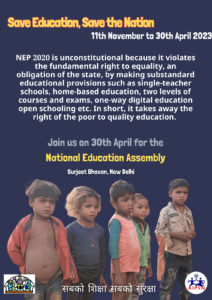
The Second National Education Assembly is being held on 27, 28 December at Chennai 

Click on the links below to read some of the Reference papers 


NEA2AipsnChennaiDeclaration


NEA2Chennai papers


CompilnHrEdnDeskpapers


AIPSN-AlternateNEPproposal


2023NEA-Paper-HrEdn-pamphlet


2023NEA-Declaration-HrEdn


English poster NEA

NEA2posterEnglish

NEA2 poster Hindi

NEA2 poster Hindi

Charter of Demands from First NEA held in 2023 at New Delhi English  Hindi

Declaration of First NEA held in 2023 at New Delhi   English   Hindi 

click here for Tamil Translation of speech by R. Bindu, Minister for Higher Education and Social Justice, Kerala on 30 Apr at NEA

Schedule of the NEA on 30th April


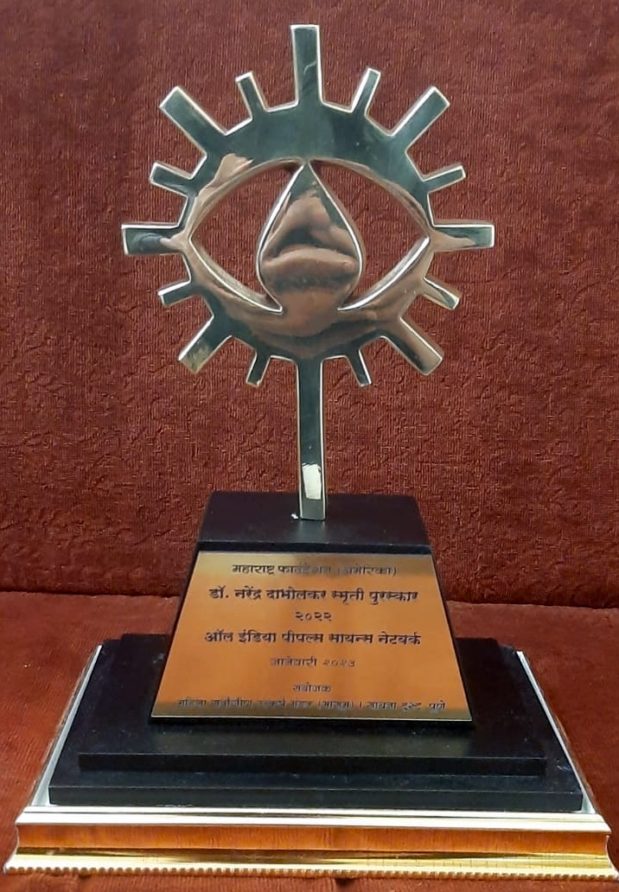
Dr. Narendra Dhabolkar Award for Science and Scientific Temper work of AIPSN

Dr. Narendra Dhabolkar Award for Science and Scientific Temper work of AIPSN

Click to read the pdf of the article  on Universalizing Scientific Temper from AIPSN published in the Maharashtra Foundation Souvenir in English and Marathi.

The award ceremony for Dr. Narendra Dhabolkar Award instituted by Maharashtra Foundation took place in Pune on Saturday 28th January 2023. President AIPSN Satyajit Rath and General Secretary AIPSN Asha Misha received the award on behalf of AIPSN. The EC of AIPSN was also represented by Convenor of Scientific Temper Desk Arunabha Misra  along with Vivek Monteiro, Geeta Mahashabde , others from BGVS Maharashtra and Samata Coordinator. The President AIPSN Dr. Satyajit Rath gave the acceptance speech. The article on Universalizing Scientific Temper from AIPSN was published in the Maharashtra Foundation Souvenir.  The EC of AIPSN had earlier decided to accept only the non-monetary part of the award. The memorial plaque shown in picture here was received.

AIPSN response to draft FHEI regulations from UGC

AIPSN response to draft FHEI regulations from UGC

click here to see the pdf file of the AIPSN response to UGC

click here to see the email sent to UGC 

                  AIPSN Response to draft FHEI regulations from UGC       

cover letter

18 Jan 2023

To

Prof. Rajnish Jain

Secretary UGC

secy.ugc@nic.in

ugcforeigncollaboration@gmail.com


Sub: Response on the draft FHEI regulations from UGC

                                    Ref: Yr Lr F.No 1-3/2022(NEP) dt 5 Jan 2023


Based on the request in your above referred letter from the UGC site, please find attached the response from AIPSN on the draft University Grants Commission (Setting up and Operation of Campuses of Foreign Higher Educational Institutions in India) Regulations, 2023


Do acknowledge the receipt of this document.

 Look forward to having all the inputs received made available publicly.

 AIPSN calls upon UGC to abandon this draft regulation to setup and operate campuses of foreign higher educational institutions in India and instead initiate an open discussion with the stakeholders in India to enable the higher education system in India to first function properly to achieve that Education Ambedkar wanted: “Education is what makes a person fearless, teaches him the lesson of unity, makes him aware of his rights and inspires him to struggle for his rights”.

Yours sincerely


Asha Mishra

General Secretary, AIPSN

Mobile: 9425302012


 18 Jan 2023

All-India Peoples Science Network

Response to draft University Grants Commission (Setting up and Operation of Campuses of Foreign Higher Educational Institutions in India) Regulations, 2023

Sub: Response on the draft FHEI regulations from UGC

            Ref: Yr Lr F.No 1-3/2022(NEP) dt 5 Jan 2023


The response from AIPSN is given in two parts: a) Procedural inconsistencies and b) Long term deleterious impacts

  1. Procedural inconsistencies
  2. A democratic exercise has once again been hijacked and made a mockery of in a process that has become familiar. Force a bill, act, ordinance, directive or regulation without any discussion to plead that it is good for the nation. This has happened, to mention a related few instances, in the case of NEP, UGC ABC, STIP and others. The same has now also happened with this UGC FHEI draft regulations being put up on 5th Jan 2023 on the UGC website with the last date to respond as 18th Jan 2023.
  3. The question naturally arises what is the urgency? There has to be more time given. As it is a scheme that is meant for students, the students need to be involved in the discussion. The time could be given till 30th April 2023 and then the responses can be made public before a new draft is circulated.
  4. There is no possibility of postal response. The online and internet access in India is not uniform across the country and in different social strata. Sufficient time is needed for postal responses also from students and others to respond offline also.
  5. It is surprising that UGC has chosen a gmail id for soliciting responses rather than use an official government email id or website for the responses. If UGC does not have this capability even, how is it going to interact with the FHEIs? Or is it an indication that this process will be outsourced to a private party?
  6. Long term deleterious impacts
  7. The entry of FHEIs will make higher education more elitist – increase the costs and reduce the access and quality of higher education that will be available to the socially and economically marginalized. It will lead to further commercialization of the higher education system.
  8. The draft regulations violate social justice. There is no mention even of Reservations and the FHEIs are given a free run in the appointments of faculty and staff as Clause 6.1 says “6.1.The Foreign Higher Educational Institutions shall have the autonomy to recruit faculty and staff from India and abroad as per its recruitment norms.”


  1. There is no provision for Reservation in the student admissions. Clause 5.4.only says “Based on an evaluation process, full or partial need-based scholarships may be provided by the FHEI from funds such as endowment funds, alumni donations, tuition revenues and other sources.” Moreover the FHEIs are given a free run in fixing the fees as mentioned in Clause 5.1 and 5.2 “5.1. The campus of Foreign Higher Educational Institutions may evolve their admission process and criteria to admit domestic and foreign students. 5.2. It shall decide the fee structure, which should be transparent and reasonable.”

Effectively socially and economically marginalised sections will not be able to get the benefits. The entry of FHEIs will further increase the access divide between the privileged from the historically and socially underprivileged.


  1. Clause 5.3 states “The Foreign Higher Educational Institutions shall make available the prospectus on its website at least 60 days before the commencement of admissions, including fee structure, refund policy, number of seats in a programme, eligibility qualifications, and admission process.”

Without getting the approval of UGC publishing the prospectus is favouring the FHEIs to fix their fees as high as is possible. FHEI is considered as like our new HEIs.


  1. 6.3.It shall ensure that the foreign faculty appointed to teach at the Indian campus shall stay at the campus in India for a reasonable period.

Since students may join on the basis of the foreign faculty and if they leave the students may be affected. This is also unreasonable. The foreign faculty must be retained till the students’ requirements are met.


  1. Clause 3.1 and 3.2 of the draft regulations states:

“3.1. If the applicant is a foreign university, it should have secured a position within the top 500 of overall / subject-wise global rankings, as decided by the Commission from time to time; 3.2.In the case of a foreign educational institution, the applicant should be a reputed institution in its home jurisdiction.”

There are several overall and subject-wise global rankings of Universities. Which of the ones is UGC talking about here? Saying that “as decided by the Commission from time to time” only suggests the room for favouritism and undue influence. Clause 3.2 provides a large leeway for accommodating foreign educational institutions as there is no objective way to decide “reputed institution in home jurisdiction”. Moreover, there is much debate about rankings’ interpretation, accuracy, and usefulness. The expanding diversity in rating methodologies and accompanying criticisms of each indicate the lack of consensus in the field. Further, it seems possible to game the ranking systems through excessive self-citations or by researchers supporting each other in surveys. UNESCO has questioned whether rankings “do more harm than good”, while acknowledging that “Rightly or wrongly, they are perceived as a measure of quality and so create intense competition between universities all over the world”. So clause 3.1 and 3.2 merely end up as fig leaves to give an air of quality to the FHEIs that are only intent on making money in India from Indian students.


  1. Clause 4.1 talks of “An Undertaking to the effect that- (i) the quality of education imparted by it in its Indian campus is at par with that of the main campus in the country of origin, (ii) the qualifications awarded to the students in the Indian campus shall be recognised and treated as equivalent to the corresponding qualifications awarded by the Foreign Higher Educational Institutions in the main campus located in the country of origin for all purposes, including higher education and employment;”. This is reiterated in Clause 7.2 and 7.4 “7.2.It shall ensure that the quality of education imparted by it in its Indian campus is at par with that of the main campus in the country of origin. 7.4. The qualifications awarded to the students in the Indian campus shall be recognised and treated as equivalent to the corresponding qualifications awarded by the Foreign Higher Educational Institutions in the main campus located in the country of origin.”

The question arises how will the “at par” and “equivalence” be determined and enforced. What happens if it is found that these are not there as in the undertaking given. We have a history of private educational institutions that are nothing but glorified shops selling qualifications and with no serious action being taken on them for their violations. It will be only the students and the families of the students that will pay the price and suffer for the violations.

  1. Clause 7.5. says “The qualifications awarded under these Regulations shall be equivalent to any corresponding degree awarded by the Indian Higher Educational Institution with the following stipulations: (i) there shall be no further requirement of seeking equivalence from any authority; and (ii) the degree shall have all benefits, rights, and privileges as obtained in the case of a degree awarded by an Indian Higher Educational Institution ordinarily.

The equivalence must not only be in India but also in other countries as is available when degree is from its parent country.

  1. Clause 4.3 mentions “4.3.The Commission shall constitute a Standing Committee to examine matters related to the Setting up and Operation of Campuses of Foreign Higher Educational Institutions in India.”

There is no specification of what will be the constitution of the Standing Committee. Will it involve representatives of student and teachers organisations? Will the civil society groups be represented? What is the level of openness and transparency that will be guaranteed in the constitution and functioning of the Standing Committee?


  1. Clause 7.7 glibly talks of “The Foreign Higher Educational Institutions should arrange for adequate physical infrastructure in terms of built-up space for their academic programmes.”

We know how many private universities operated and still operate from houses and shops. Many a time courses are offered without adequate infrastructure. How can the “adequate” referred to in this clause be decided and implemented? It should be defined on the basis of number of courses and students as surety to the students. Otherwise in effect, most FHEIs will come on fishing expeditions and wind up shop if not profitable.


  1. The worst crime in the Indian context against the marginalised sections that higher education has to empower is the regulation in effect allows for open profiteering in education. Previously under the garb of “non profit” the private higher educational institutions used to make money from students and their families. Now as Clause 8.3 tells “Cross-border movement of funds and maintenance of Foreign Currency Accounts, mode of payments, remittance, repatriation, and sale of proceeds, if any, shall be as per the Foreign Exchange Management Act (FEMA) 1999 and its Rules.” The FHEIs do not even have to put back the profits into India for education or other social purposes. They are allowed to send the profits out of the country. This amount will ultimately become more than the so-called drain of foreign exchange by students going abroad for studies.


  1. AIPSN calls upon UGC to abandon this draft regulation to setup and operate campuses of foreign higher educational institutions in India and instead initiate an open discussion with the stakeholders in India to enable the higher education system in India to first function properly to achieve that Education Ambedkar wanted: “Education is what makes a person fearless, teaches him the lesson of unity, makes him aware of his rights and inspires him to struggle for his rights”.

For Contact:

Asha Mishra

General Secretary, AIPSN

Mobile: 9425302012   Email: gsaipsn@gmail.com

Regressive and Unconstitutional NCERT’s Textbook changes

Press Release

11 July 2022

click here to get the press release pdf in English

AIPSN Resists

Regressive and Unconstitutional NCERT’s Textbook changes


All India Peoples’ Science Network (AIPSN) is concerned that the National Education Policy 2020 implementation in respect of the content of school education at the NCERT having wider academic, educational, political and social implications is already underway. Changes have been made without any academic considerations or academic logic. No consultation with the SCERTs and the education departments of the state governments, School teachers, and the wider academic community having been done before deletions and revisions in the content of social sciences text books used at the school level. All the changes have been done in a hasty ad hoc manner. Academics, teachers and the Peoples’ Science Movements have earlier also made their apprehensions clear about the National Education Policy (NEP), 2020, to the Union Government and the State Governments who have the responsibility and decision and policy making power.

As the things stand, the Indian Express investigations done recently in this regard have brought out that NCERT is involved in making sweeping changes undertaken in the most opaque manner possible in respect of the social sciences textbooks used at the schools involving crores of students. Since NCERT is a specialized apex institution of the Government of India the process required should have involved the authorities and educationists working at the state level. The reach of NCERT is very wide and not limited to any particular state.  Since school level education textbooks utilized in elementary and secondary education in the domain of social sciences can impact on the society as a whole the process should have been democratically undertaken in consonance with the academic requirements and the school education related provisions enshrined in the Indian Constitution as it stands today.

The revisions touches on some vital points about the state-citizen relationship, the vision of democracy, secularism and the constitutional vision of education as enshrined in the Indian Constitution as it stands even today. The revisions have been undertaken in a non-transparent manner as reported in the IE 4 part investigation. Chopping off sections, making revisions and undertaking deletions amount to rewriting the books of social sciences. The revisions in social science textbooks include the content related to the violence against Muslims in Gujarat in 2002 and the discussion on Emergency in 1975-77.  The apex agency of education is suggesting politically and ideologically motivated changes in the history text books, for example, deleting content related the Delhi Sultanate and the Mughal Empire. The revisions will also impact how school students learn about the inequities of the caste system and the impact of social and protest movements such as the Narmada Bachao Andolan.

From the changes made it is clear that the school textbooks are being rewritten. Rewriting has been motivated by the push for the politics and ideology of a regressive nature. The intention is to completely stem out the critical thinking from the society through the highly questionable and repressive indoctrination process. This is what is reflected in the changes recommended to the school education textbooks. It does not want the students to learn about caste as a system of injustice. The deletions would end up in establishing an education system wherein the students will be actively prevented from understanding the actual functioning of institutions like caste, community, class and political-bureaucratic apparatus and the real reasons for the emergence of social protests in India.

Without involving the wider academic community and the social scientists who edited the earlier books on Social Sciences-history, political and social domains of knowledge changes have been made by those individuals who are not known for their academic contributions in the social sciences domains. The process followed at NCERT has the full support from the Ministry of Education. Changes reflect the Hindutva agenda to turn education at the school level into the creation of an illiberal political-bureaucratic, academic apparatus and society which is communally charged in which protests of citizens would be, if not impossible but looked upon as social aberrations that need to be disapproved.

While the PSMs apprehended at the stage of the National Education Policy of 2020 formulation and announcement that the changes in education expected would be regressive, but the direction of these changes portends even a more dangerous trend. The ruling party led state governments are actively undertaking the same process in various states. Karnataka government is very much determined to make similar types of changes. The government is going ahead with these changes despite the resistance mounted by the leaders of opposition parties and social movements active at the state level. This means that the ruling party is not interested in following the Constitutional Obligations.

The political-bureaucratic apparatus is using the NCERT to make changes that will impact quite adversely on the state and direction of democracy, education and social change. The people’s science movement urges the union government to stop this kind of irrational tampering in the textbooks with non academic intention and with communal objective. Before making any changes in the existing text book develop the national curriculum frame work with the leadership of academics who have strong conviction towards our constitution and constitutional values and also having deeper understanding regarding content and pedagogy. Any changes in the textbook shall be done with academic logic and pedagogical understanding. And people’s science movement also urges the public to come together and resist the hasty, regressive, unconstitutional and nonacademic changes in the textbooks undertaken by NCERT.


Contact:

General Secretary Ms. Asha Mishra

9425302012